Completed September 2024

QUANTA Register

Commerce Engineered for the Counter

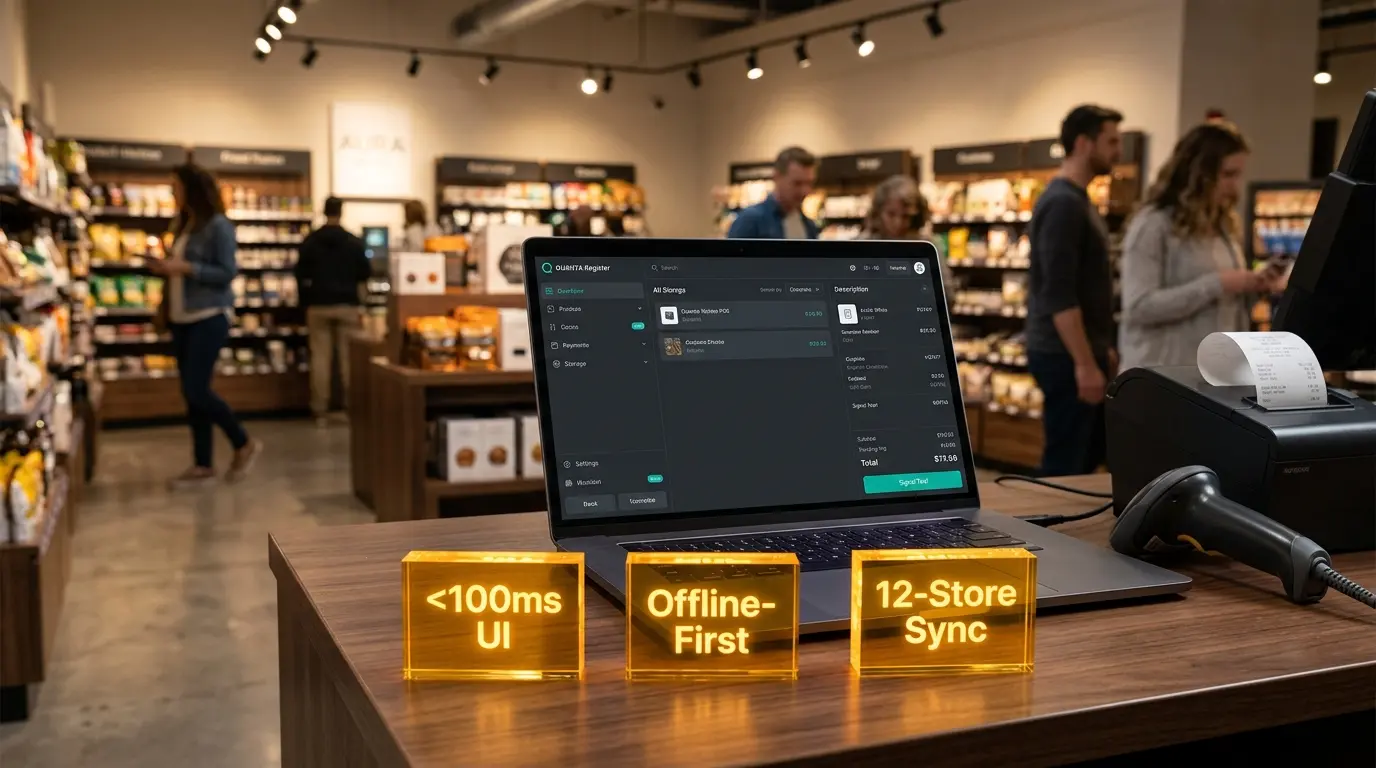
QUANTA Register — project preview
Project Overview
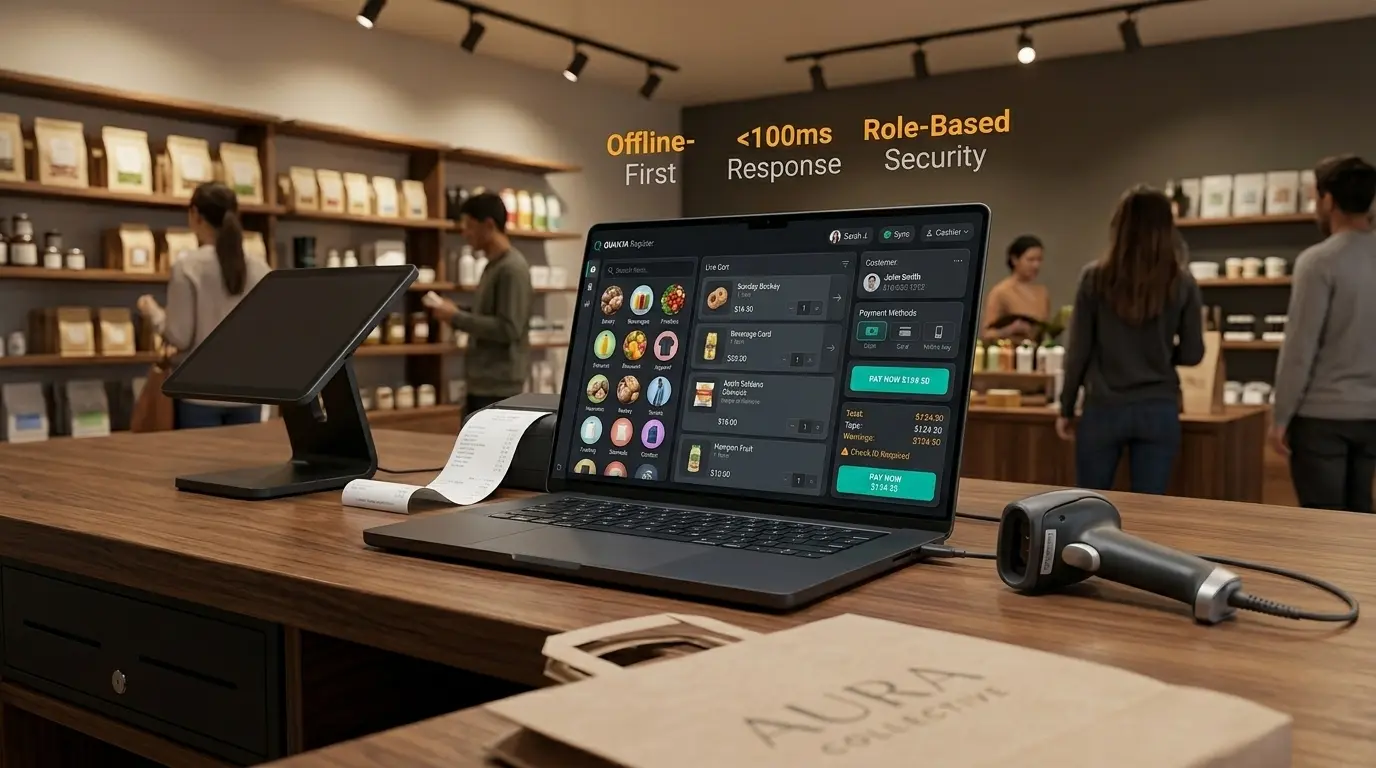
We engineered a native, offline-first counter operating system to replace AURA Retail Collective’s fragmented, browser-dependent checkout infrastructure. Operating across twelve premium lifestyle locations in the GCC, the group required a high-performance platform capable of unifying sales, inventory tracking, and staff workflows without sacrificing tactile responsiveness. Our team delivered QUANTA Register as a precision-engineered desktop application that eliminates cognitive friction during extended cashier shifts and peak traffic surges.
 

The Vision

Our mandate was clear: eradicate web-based latency, establish direct hardware integration, and maintain absolute data integrity across distributed locations. By architecting a local-first SQLite foundation paired with enterprise-grade cloud synchronization, we ensured continuous operational readiness regardless of regional network fluctuations.
 

Strategic Execution

To meet AURA’s exacting standards, our engineering and design workflows converged around three operational pillars:
  • Sub-100ms UI Response: Native .NET 8 WPF rendering delivers instantaneous tactile feedback, enabling rapid barcode scanning and seamless transaction flows.
  • Zero-Dependency Operations: Local transaction processing guarantees uninterrupted sales during connectivity outages, with intelligent conflict resolution preserving inventory accuracy.
  • Enterprise Security Posture: Azure Active Directory enforces strict role-based access controls, ensuring operational compliance while streamlining daily staff rotations.

The Challenge

The Challenge
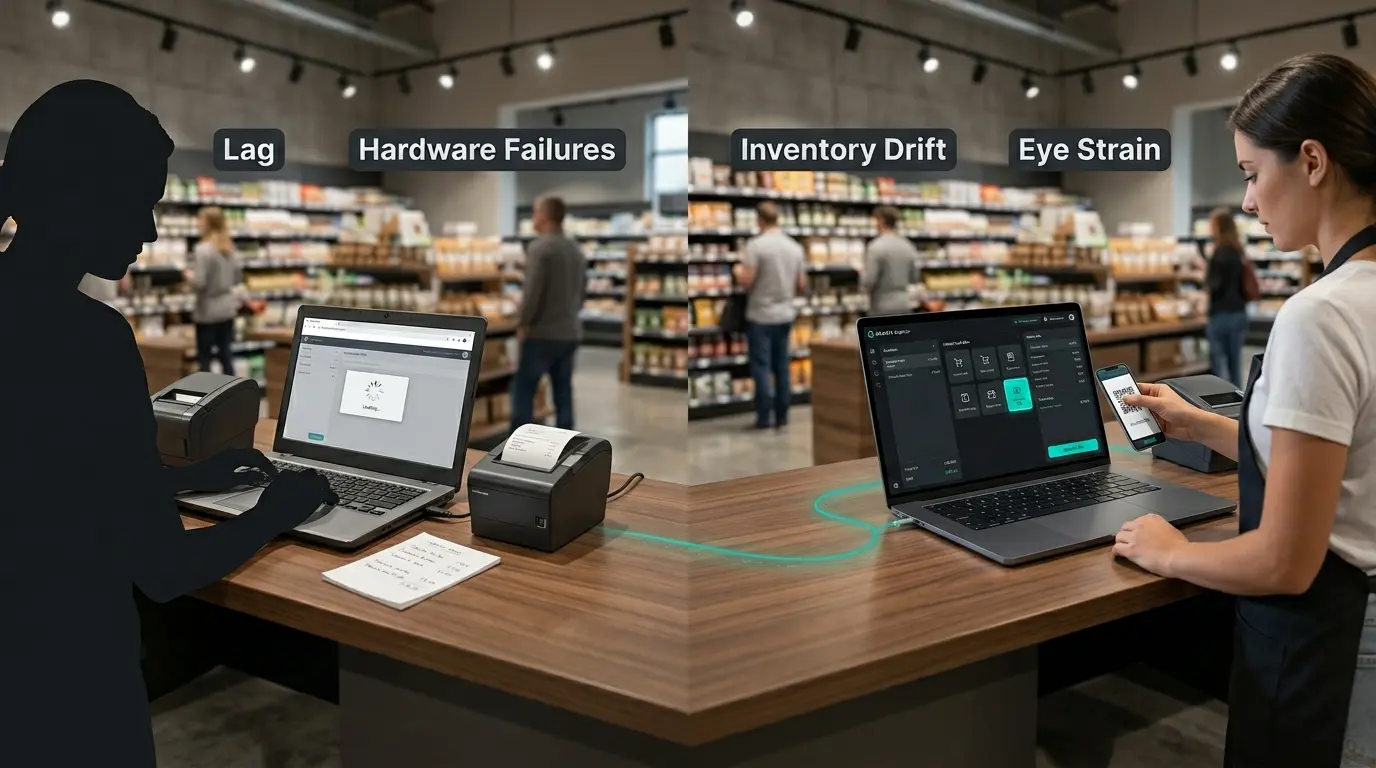
Alt text: Frozen browser checkout failure state We confronted a critical operational bottleneck: AURA’s existing browser-based POS consistently degraded under peak traffic, triggering frozen interfaces and forcing staff to revert to manual receipt logging. This architectural reliance introduced severe hardware friction, as web permission models could not reliably handshake with Zebra receipt printers or high-speed USB barcode scanners. Simultaneously, delayed inventory synchronization across the twelve-store network created persistent oversell risks and eroded customer trust. Prolonged exposure to high-brightness, white-dominant interfaces further accelerated cashier fatigue. Our intervention required a complete paradigm shift from cloud-dependent latency to local-first reliability.
 

Core Friction Points

  • Network Volatility: Browser locks during checkout surges halted transaction throughput and compromised queue management.
  • Hardware Abstraction Failure: Web permission sandboxes blocked direct, low-latency communication with essential peripheral devices.
  • Inventory Drift: Asynchronous data updates across distributed locations caused persistent stock discrepancies and revenue leakage.
  • Operator Fatigue: High-contrast, glare-heavy web layouts induced visual strain during extended eight-hour operational windows.

Technical Architecture

Technical Architecture
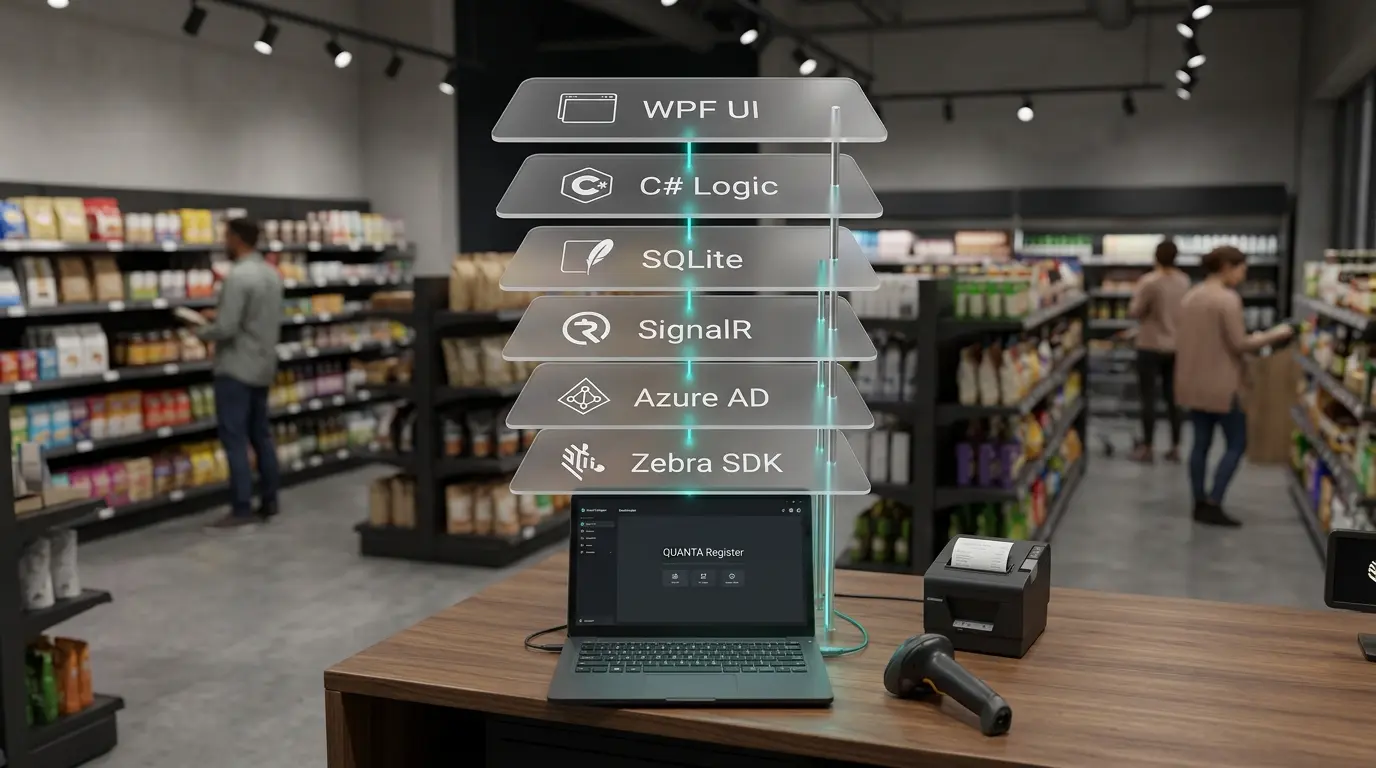
We constructed a purpose-built, layered architecture designed for offline resilience and deterministic hardware control. By decoupling the presentation layer from local data storage and background synchronization protocols, our engineering team established a fault-tolerant pipeline. This modular stack ensures that core retail operations execute independently of network availability while maintaining enterprise-grade security and multi-store data coherence.
 
 
Layer
Technology
Purpose
Presentation
.NET 8 WPF + DevExpress
Native high-performance UI
Logic
C# + MVVM
Testable business rules
Data
EF Core + SQLite
Instant local transactions
Sync
SignalR + Azure Service Bus
Real-time multi-store replication
Security
Azure AD
Role-based access control
Hardware
Zebra SDK
Direct printer and scanner integration

Engineering Process

Engineering Process
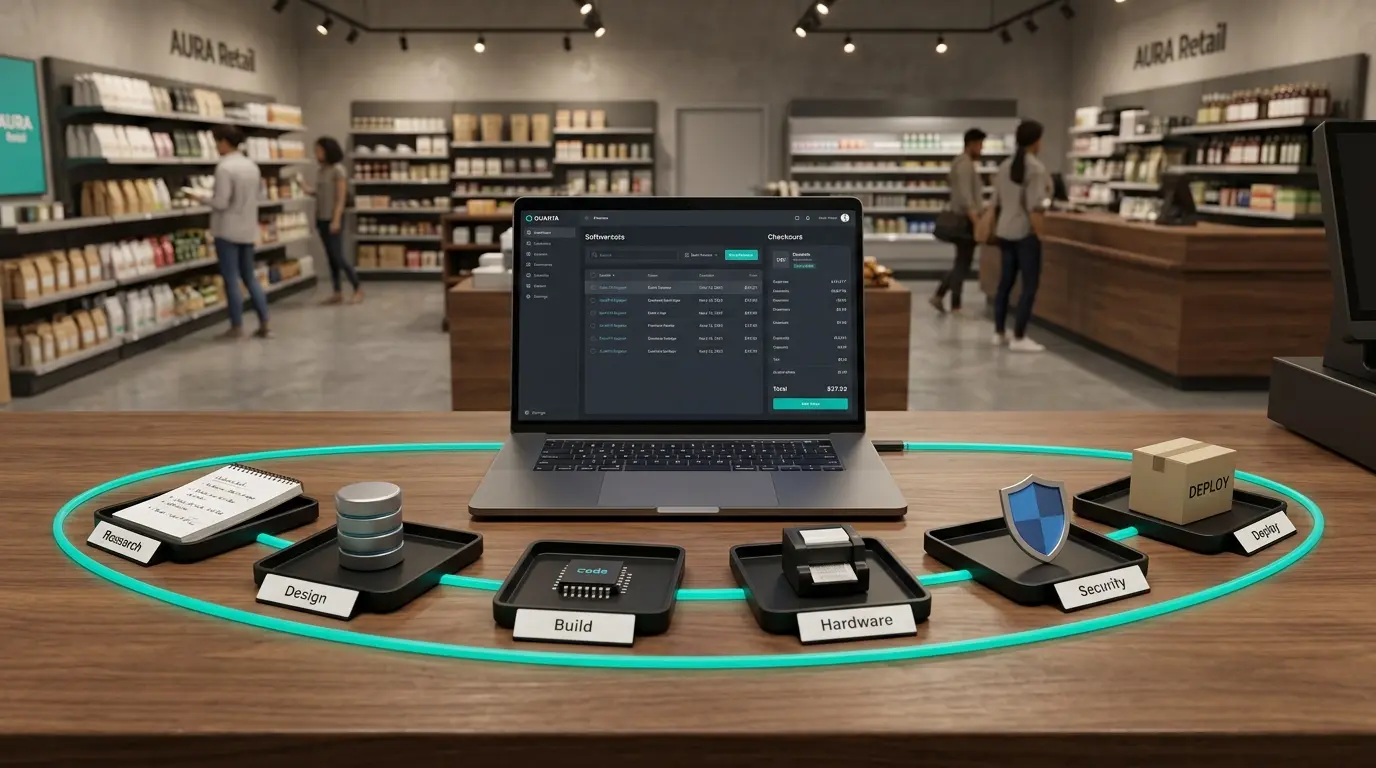
Our delivery methodology followed a rigorously phased approach, beginning with on-site observational research to map exact cashier keystroke patterns and ergonomic fatigue points. We then modeled a conflict-resistant EF Core schema before transitioning into native WPF construction, prioritizing keyboard-first navigation and tactile tile rendering. Hardware abstraction layers were engineered next, integrating Zebra SDK services to bypass browser limitations entirely. Security hardening and MSIX deployment finalized the pipeline, embedding Serilog telemetry for continuous performance monitoring.
 

Development Milestones

  • Counter Research: Field observation mapped high-frequency interactions and optimized interface spacing for reduced cognitive load.
  • Data Design: Entity Framework Core schema established robust offline conflict resolution for products, categories, users, and orders.
  • Native Build: WPF implementation leveraged DevExpress components to render responsive tactile tiles and keyboard-driven workflows.
  • Hardware Integration: Direct SDK communication eliminated permission prompts, enabling instant scanner input and receipt dispatch.
  • Security Hardening: Azure Active Directory integration established granular Admin, Cashier, and Manager access controls.
  • Deployment: MSIX packaging enabled silent background updates, ensuring continuous system evolution without operational disruption.

Product Capabilities

Product Capabilities
We engineered capabilities specifically calibrated for high-velocity retail environments, moving beyond generic CRUD functionality to deliver decision-ready operational tools. Each feature addresses a documented friction point, from accelerating queue throughput to enforcing strict financial controls. The system’s design prioritizes tactile interaction models and deterministic hardware communication to sustain peak-hour performance.
 
 
Capability
Function
Operational Impact
Instant Checkout
Tactile cart with keyboard shortcuts
Reduces queue time
Real-Time Inventory
SQLite with SignalR sync
Prevents oversells
Role-Based Access
Azure AD Admin, Cashier, Manager
Enforces security
Hardware Native
Direct printer and scanner SDK
Eliminates browser failures

Performance & ROI

Performance & ROI
The deployment of QUANTA Register immediately translated architectural decisions into measurable operational gains. By eliminating web-based latency and establishing deterministic local execution, we delivered a platform that sustains peak-hour throughput without degradation. Real-time synchronization and enterprise-grade access controls provide AURA Retail Collective with continuous visibility into store-level performance and financial security.
 

Operational Impact Metrics

  • Sub-100ms UI Response: Native WPF rendering ensures instantaneous cart updates and transaction processing during high-volume periods.
  • Zero-Downtime Reliability: Offline-first SQLite architecture guarantees continuous sales operations and data capture during regional network outages.
  • Cross-Store Accuracy: SignalR synchronization maintains absolute inventory truth across all twelve locations, eliminating costly oversell scenarios.
  • Enforced Compliance: Azure AD role restrictions prevent unauthorized price modifications and voids, protecting margin integrity and audit readiness.

Main Landing Page

Main Landing Page

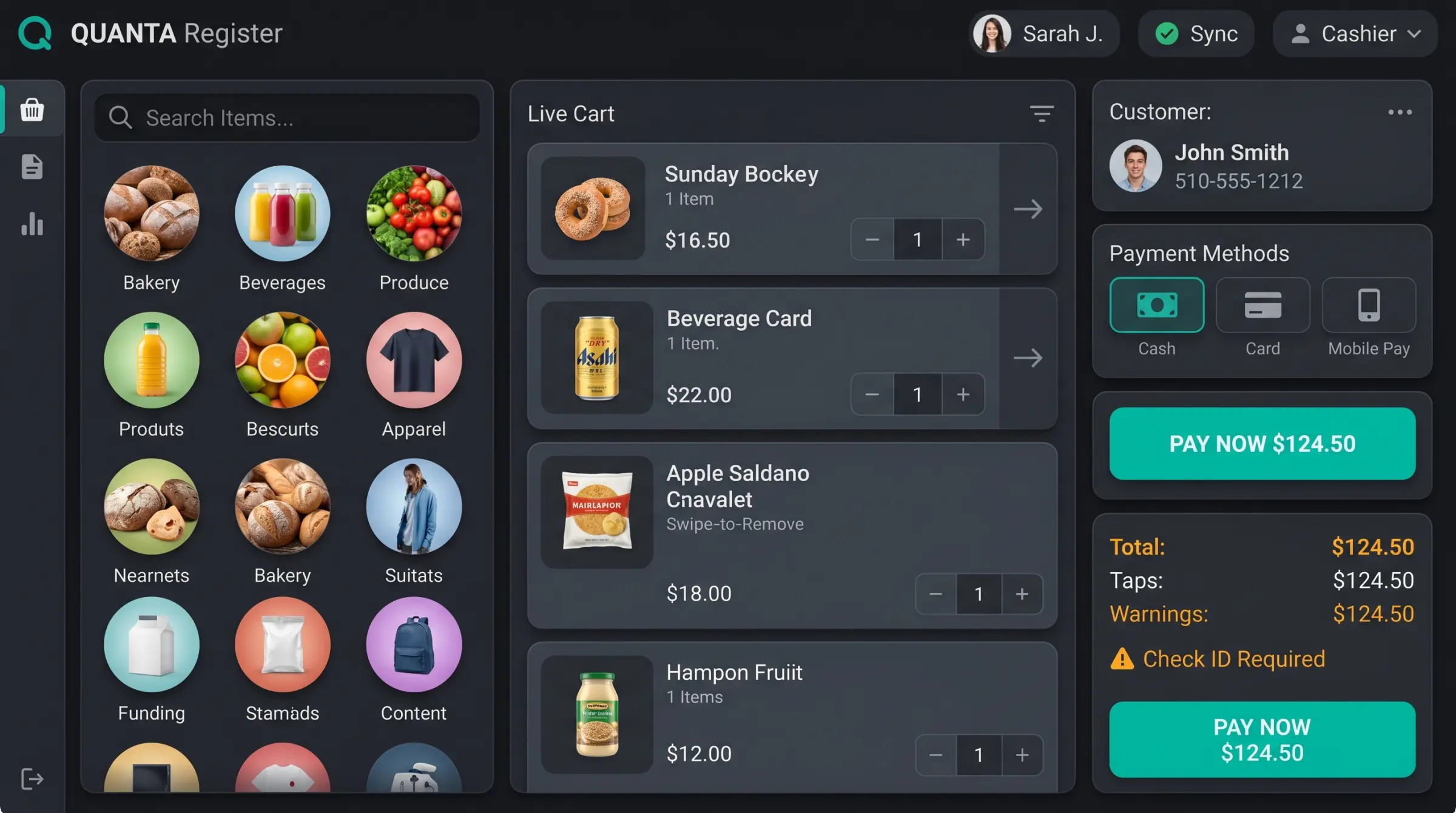
Our interface architecture prioritizes tactile responsiveness and cognitive clarity for high-intensity retail environments. We abandoned conventional web-based layouts in favor of a full-bleed, edge-to-edge spatial workspace that eliminates visual noise and reduces decision latency. The design system employs a dark, low-glare material language—layering matte polymer surfaces with brushed aluminum and frosted acrylic panels to mitigate eye strain during extended shifts. A strict three-column information architecture organizes rapid search inputs, live transaction tiles, and payment workflows into distinct ergonomic zones. High-contrast action states and generous typographic spacing ensure instant scanability, while keyboard-first navigation with touch fallback optimizes throughput for seasoned cashiers. By removing browser chrome and standardizing interaction models around physical tactility, we delivered an interface that operates as a precision instrument rather than a passive application, directly supporting AURA’s mandate for seamless, premium customer experiences.

How it works

From first call to live in production

A disciplined process that eliminates surprises — fixed scope, weekly visibility, and on-time delivery as standard.

01

Discovery & Architecture

We map your requirements, define the tech stack, database schema, and system architecture before writing a single line of code.

02

Development Sprints

Iterative builds with regular demos. You see progress weekly — no black-box development cycles.

03

QA & Performance Testing

Every feature is tested across browsers and devices. Load testing, security audits, and code review before launch.

04

Deployment & Handover

Clean deployment to your hosting environment with full documentation, training, and 30-day post-launch support.


Why The DiGiT

Built by a team that has done this before

We've delivered projects across fintech, healthtech, edtech, and B2B — we know what breaks at scale and how to avoid it.

Track Record

50+ Projects Delivered

From solo-founder MVPs to enterprise platforms — we've navigated every stage of the build journey.

  • Fintech & B2B SaaS
  • Healthcare & EdTech
  • Rapid MVP Launch
  • Enterprise Scale-up
View our work
Most Popular

Average ROI In Year One

Our clients consistently see 3× return on their development investment within 12 months of launching.

  • Efficiency audits
  • AI-driven automation
  • Reduced technical debt
  • Growth-focused dev
Get a quote
Partnership

98% Client Retention Rate

We don't disappear after launch. Our retainer partnerships keep clients scaling with us long-term.

  • Weekly visibility
  • Infrastructure scaling
  • 24/7 priority support
  • Product roadmapping
Start a project

Ready to get started
with Quality Assurance & Resilience Testing?

Tell us what you're building and we'll show you exactly how we'd approach it — no pressure, no fluff, just an honest conversation about scope, timeline, and what's possible.