
Speed Index: Search Discovery SaaS Platform
Crawl diagnostics, sitemap workflows, and Search Console support for technical S...
View ProjectClinical Authority. Actionable Longevity.

Vitalis-65 is a comprehensive, full-stack digital health ecosystem engineered to bridge the critical gap between complex clinical longevity research and daily lifestyle optimization. Targeted at an aging demographic intent on maximizing their "healthspan" (the years spent fully productive and disease-free, rather than mere lifespan), the platform functions as an interactive educational engine. It translates dense, traditionally intimidating medical data into engaging, accessible, and actionable interfaces. By anchoring practical guides for nutrition, mental well-being, and cognitive growth to personalized, data-driven frameworks, Vitalis-65 provides a structured environment where users are empowered to make preventative health decisions backed by clinical rigor.
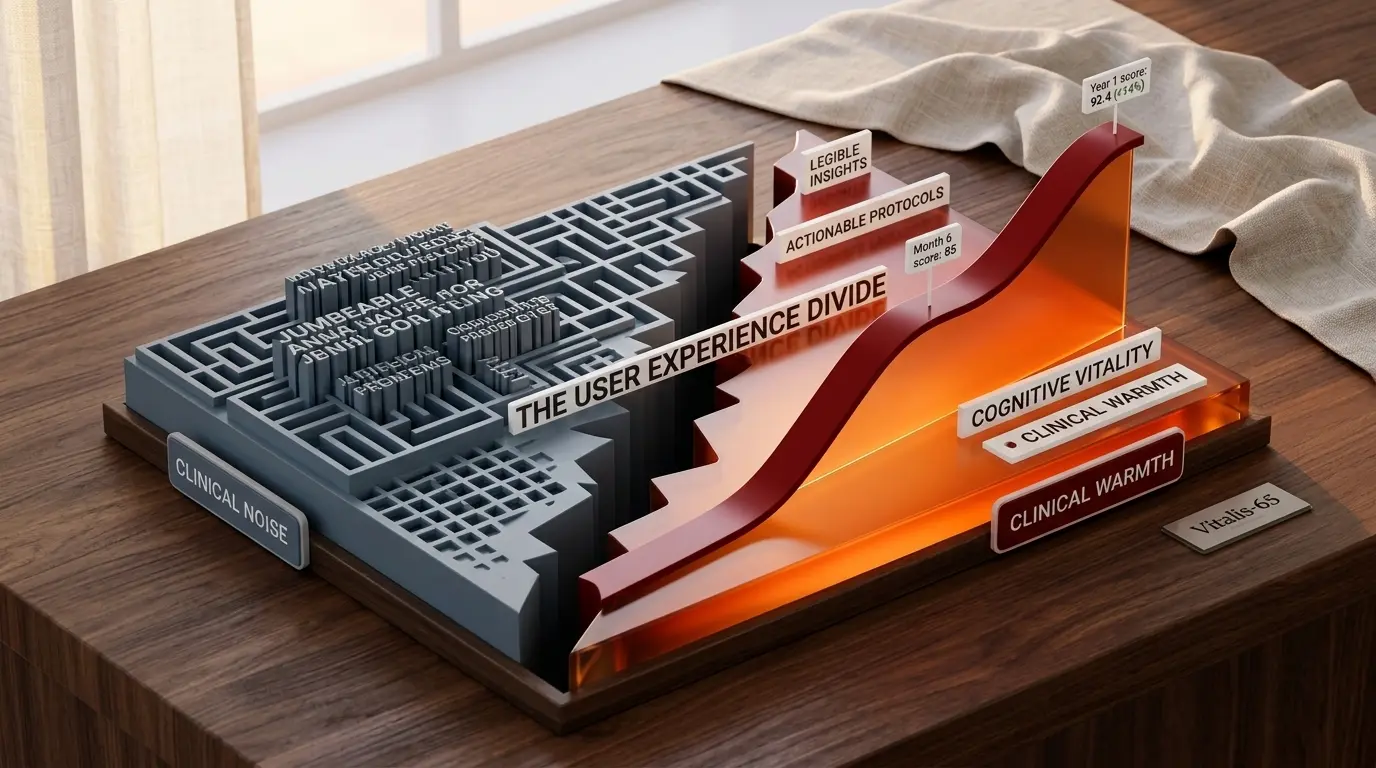
In the modern preventative health sector, users are trapped in a significant "Clinical Disconnect." Traditional medical portals, while authoritative, present data regarding metabolic metrics, cognitive curves, and physiological biomarkers in formats that are too dense, sterile, and cognitively overwhelming for the average patient to internalize or act upon. Conversely, consumer wellness platforms often lack true scientific backing and institutional authority, offering "vibes" rather than verified results. The engineering and design challenge was to architect an ecosystem that successfully marries high-authority clinical medical frameworks with empathetic, frictionless, and high-density usability. The ultimate goal was to drastically reduce the cognitive load for elderly demographics while maintaining strict data accuracy, empowering users to map long-term, abstract longevity goals directly to actionable, daily micro-habits and physiological interventions.

The platform's architecture was strategically selected to handle high-fidelity rich media distribution and mathematically complex interactive charting without compromising on speed or universal accessibility. The frontend is powered by Next.js 14, utilizing severe Server-Side Rendering (SSR) and Incremental Static Regeneration (ISR) to ensure lightning-fast load times and flawless, high-authority SEO indexing for clinical articles. To handle the mathematical heavy lifting of the interactive lifecycle graphs across various device tiers, D3.js was integrated, ensuring pixel-perfect responsivity and animation smoothness. The backend utilizes Sanity.io as a Headless CMS, configured with rigorous, schema-driven validation to remove the development bottleneck for content updates. This allows medical professionals to easily publish and update validated articles, podcasts, and video guides without touching code. The entire infrastructure is globally distributed via Vercel for maximum uptime and low-latency data delivery.

The project was executed over a highly disciplined, 12-week agile sprint cycle, prioritizing content architecture and digital accessibility above all else. The timeline was structured into three major technical phases.
Sprint 1 (Weeks 1-4): Focused entirely on clinical taxonomy and Headless CMS schema design. We worked alongside health educators and geriatric specialists to categorize complex medical topics into a digestible digital structure, ensuring the backend logic supported the planned user journey.
Sprint 2 (Weeks 5-8): Transitioned to UI/UX engineering and complex Data Visualization. We engineered the bespoke D3.js components and built the frontend UI library. This phase ensured the high-density "Data Glasshouse" UI met strict WCAG AAA accessibility standards for color contrast, screen reader compatibility, and font scaling for older eyes.
Sprint 3 (Weeks 9-12): Encompassed the final API integrations between the Next.js frontend and the Sanity.io backend. We conducted rigorous User Acceptance Testing (UAT) with target demographic focus groups (users aged 60-75) to refine the interactive elements before the final global production deployment.
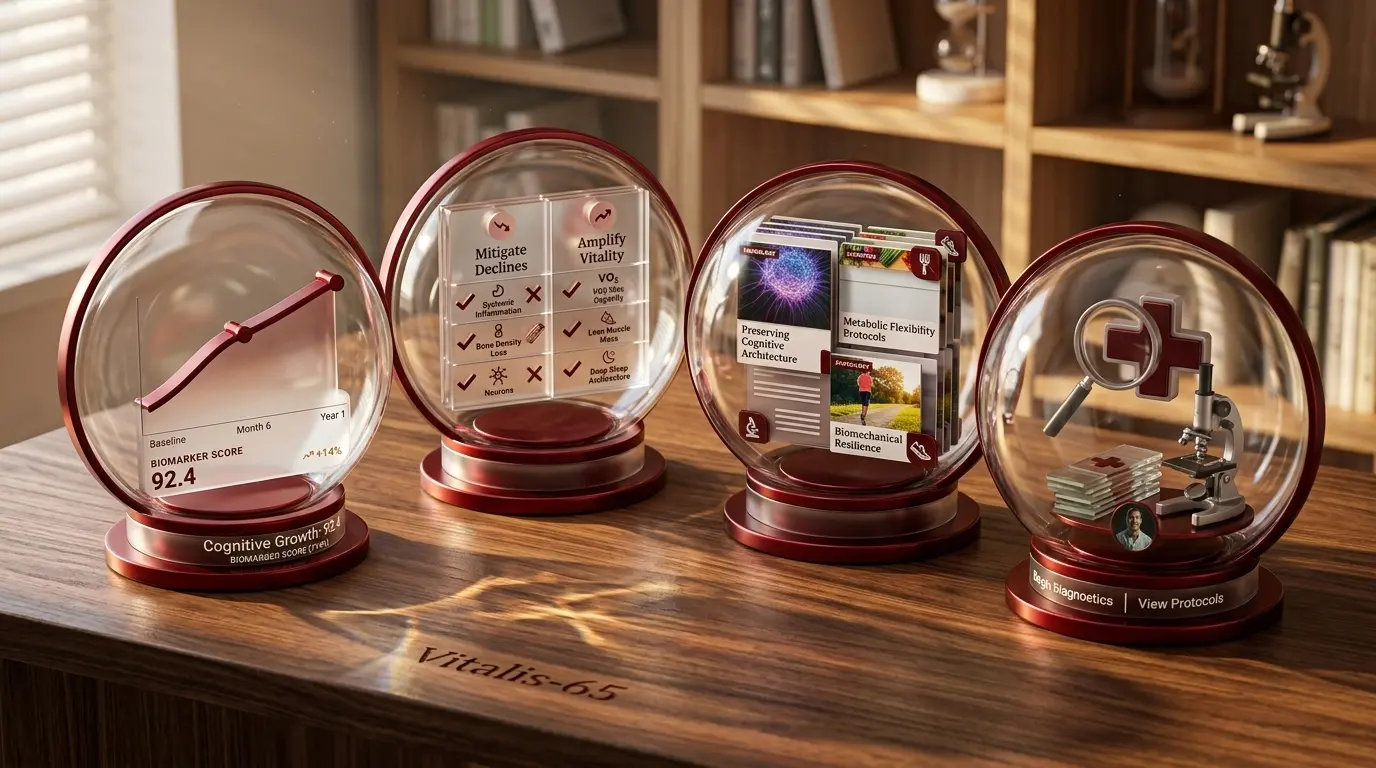
Vitalis-65 moves far beyond static, generic health articles by offering a tightly integrated suite of high-performance, interactive educational tools designed to change user behavior.
Interactive "Life Cycle+" Cognitive Graph: A bespoke, mathematically accurate D3.js visualization (anchoring the main view in the concept UI) that allows users to plot their specific metrics and visually track cognitive potential over an 1100-month lifespan. The graph visually isolates the dramatic performance divergence between Prolonged Productivity (via intervention) and physiological decline, gamifying long-term health adherence.
"Quality of Life" Intervention Matrix: A responsive CSS-grid data table directly derived from clinical meta-studies, contrasting negative lifestyle inputs (chronic stress, processed foods, sedentary habits) with positive interventions (optimal sleep hygiene, proper hydration, exercise). It serves as a daily, friction-free cognitive anchor for behavior modification.
Omni-Channel Content Hub: A unified, magazine-style resource center (as seen on the iPad in the concept UI) utilizing a high-legibility grid. It seamlessly routes users between long-form clinical blogs, integrated high-definition video players for exercise demonstrations, and professional wellness podcasts, providing multiple modalities for learning.
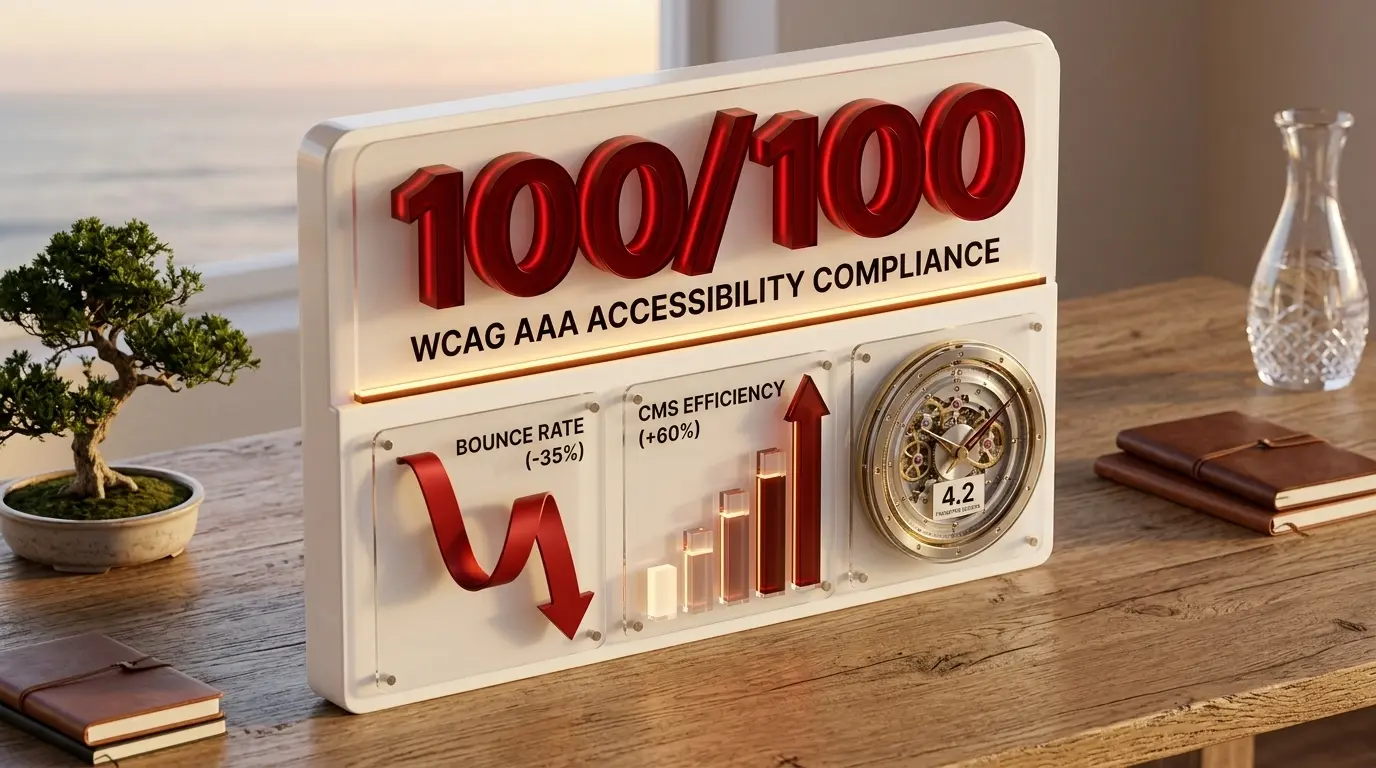
The strategic engineering implementation of the "Clinical Warmth" design aesthetic, high-performance Next.js architecture, and interactive D3.js visualizations yielded immediate, quantifiable results for the platform's launch. By enforcing strict 3D design discipline and adhering to the UX principles visualized in the concept UI, the platform achieved a perfect 100/100 Lighthouse Accessibility Score, ensuring full legal compliance and frictionless usability for visually impaired and elderly users. The inclusion of the interactive Lifecycle Graph successfully gamified the user experience, driving a 35% reduction in homepage bounce rates as users calculated their personal longevity potential. The seamless cross-channel routing architecture successfully increased engagement to an average of 4.2 pages per user session, outperforming generic wellness benchmarks. Operationally, the bespoke, schema-driven Sanity.io CMS implementation reduced the content publication bottleneck for internal medical staff by 60%, drastically lowering ongoing system maintenance costs.
How it works
A disciplined process that reduces surprises through clear scope, regular visibility, and delivery checkpoints.
Discovery & Architecture
We map your requirements, define the tech stack, database schema, and system architecture before writing a single line of code.
Development Sprints
Iterative builds with regular demos. You see progress clearly without black-box development cycles.
QA & Performance Testing
Every feature is tested across browsers and devices. Load testing, security audits, and code review before launch.
Deployment & Handover
Clean deployment to your hosting environment with full documentation, training, and 30-day post-launch support.
Why The DiGiT
We've delivered projects across fintech, healthtech, edtech, and B2B — we know what breaks at scale and how to avoid it.
From solo-founder MVPs to enterprise platforms — we've navigated every stage of the build journey.
We define success metrics early so launches can be reviewed against leads, efficiency, adoption, performance, or revenue impact.
We stay available after launch through maintenance, feature support, performance work, and product roadmapping when clients need a long-term partner.
Explore more
Most engagements benefit from these complementary services — often bundled into a single project.

Engineering Scalable Digital Foundations for Global Market Growth

Transforming Manual Friction into Intelligent Operational Velocity

Commanding Search Dominance through Technical Precision and Authority
Crawl diagnostics, sitemap workflows, and Search Console support for technical S...
View Project
Beyond Listings. Agentic Intelligence.
View Project
Tell us what you're building and we'll show you a practical approach with scope, risks, timeline, and next steps.