Project Overview
Avenir Partners required a unified orchestration platform to replace a fragmented patchwork of spreadsheets and isolated campaign builders. As a London-headquartered global talent advisory managing over 12,000 specialist placements annually for Fortune 1000 clients, their talent teams faced severe operational friction and opaque reporting. We engineered ORBIT to consolidate campaign creation, real-time analytics, and guided hiring workflows into a single, conversion-optimized SaaS surface. Our delivery strategy prioritized a design-system-first architecture, enabling marketer autonomy through a headless Sanity implementation while ensuring strict data integrity via PostgreSQL and Prisma. The result is a precision-engineered command center that transforms multi-day campaign rollouts into minute-scale executions, directly increasing recruiter throughput and pipeline velocity. The platform now serves as the central nervous system for their global talent operations, delivering measurable pipeline lift across all service lines.
Strategic Objectives Delivered:
• Reduce time-to-first-campaign from days to minutes via templated workflows
• Establish decision-ready intelligence for real-time cost-per-hire tracking
• Drive platform adoption through an editorial, low-friction interface
• Deliver a fully instrumented system ready for enterprise-scale scaling
The Challenge
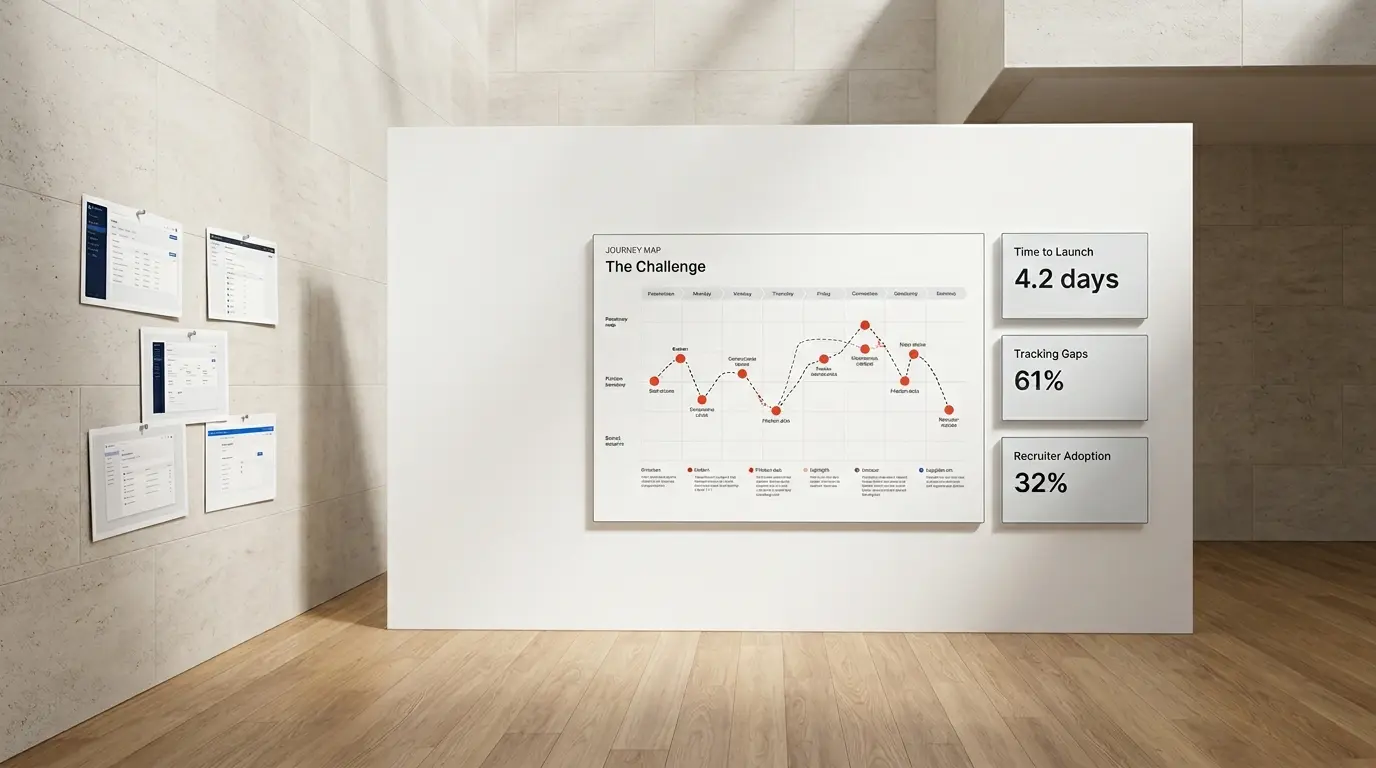
Avenir’s hiring velocity was constrained by three critical operational bottlenecks that demanded immediate architectural intervention. Our diagnostic audit revealed that talent teams were constructing campaigns across disconnected tools, resulting in severe brand fragmentation and complete tracking opacity. Leadership lacked real-time visibility into cost-per-hire metrics and channel performance, forcing reliance on manual data reconciliation. Furthermore, the steep learning curve of legacy enterprise software drove recruiters toward inefficient manual outreach. We recognized that adoption would only occur if the new platform felt editorial and intuitive, not cumbersome. We therefore designed ORBIT as a single, trustworthy surface that eliminates cognitive friction and restores workflow continuity.
Core Constraints Identified:
• Fragmented tooling causing brand inconsistency and data loss
• Operational opacity preventing real-time performance tracking
• Low software adoption driving reliance on manual outreach
Technical Architecture
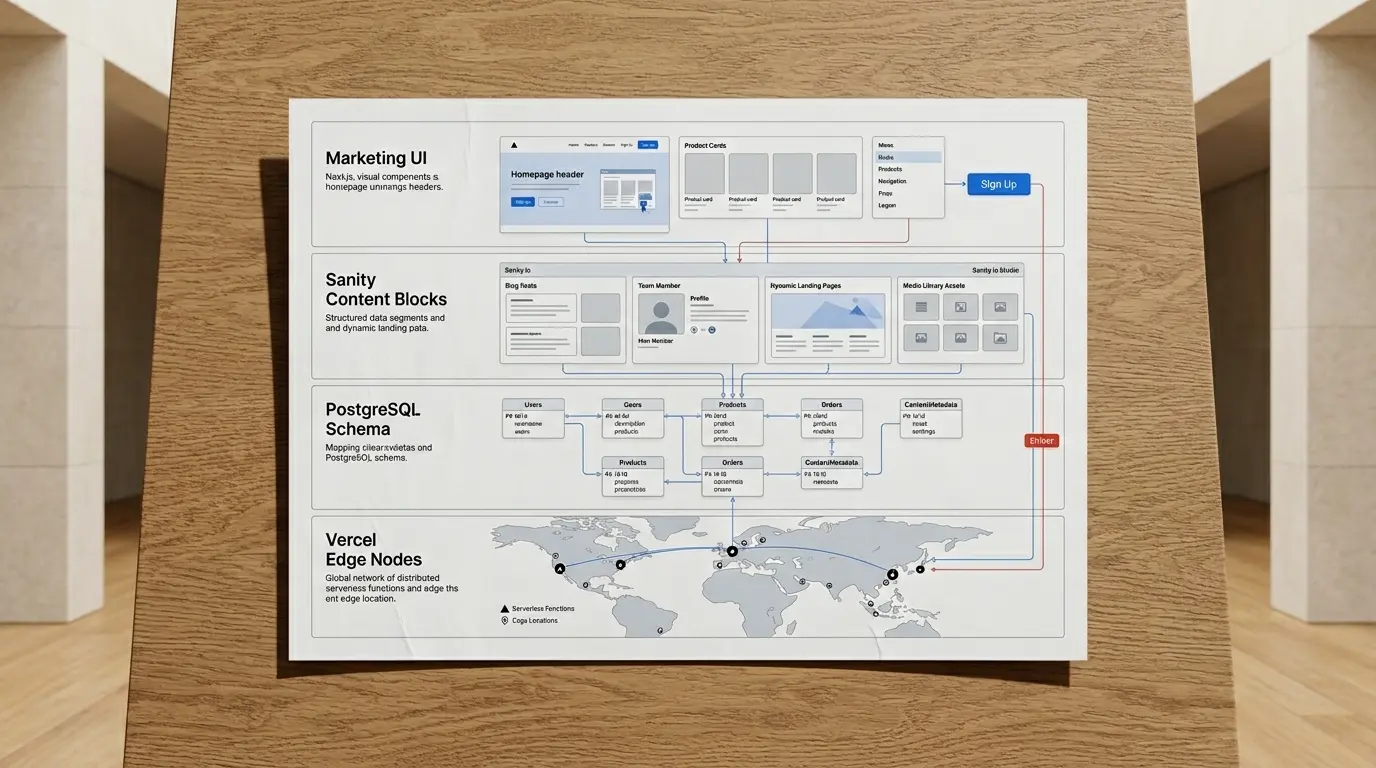
We constructed a purposeful, decoupled stack engineered to balance rapid marketing iteration with uncompromising data rigor. By separating the presentation layer from the content and data layers, we eliminated deployment bottlenecks while guaranteeing ACID compliance for hiring records. The architecture ensures edge-delivered performance, scalable campaign rendering, and marketer-controlled content updates without engineering dependency.
|
Layer
|
Technology
|
Rationale
|
|
Frontend
|
Next.js, TypeScript, Tailwind
|
Performance and conversion
|
|
Content
|
Sanity CMS
|
Marketer autonomy
|
|
Data
|
PostgreSQL, Prisma
|
Hiring data integrity
|
|
Infra
|
Vercel
|
Edge delivery
|
Engineering Process
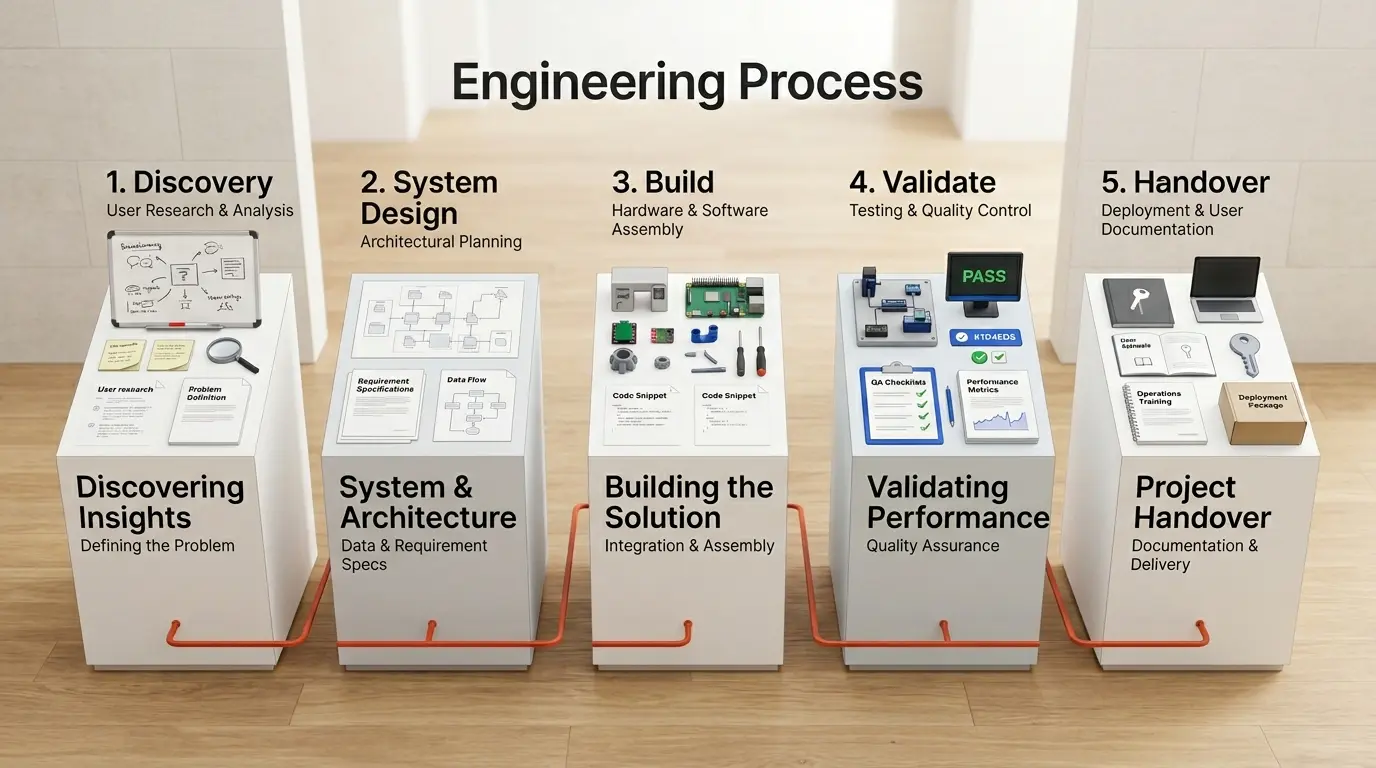
Our delivery followed a strict, conversion-first cadence designed to de-risk enterprise rollout while maximizing immediate impact. We initiated the project by auditing 47 live campaigns to map actual user bottlenecks, establishing a baseline for measurable improvement. Before drafting a single interface, we codified the design tokens and 12-column grid to guarantee visual consistency across all components. Development proceeded through parallelized workstreams targeting the landing page, dashboard, and content pipeline simultaneously, ensuring rapid iteration. We validated CTA placement and metric hierarchy using live traffic A/B testing to confirm behavioral assumptions. The final phase focused on empowering the internal marketing team to ship pages independently, securing long-term platform sustainability.
Delivery Cadence:
• Discovery: Audited existing campaigns to map friction points
• System: Established design tokens and responsive grid architecture
• Build: Executed parallel development streams for core surfaces
• Validate: Conducted live A/B testing on conversion elements
• Handover: Transferred CMS control to marketing stakeholders
Product Capabilities
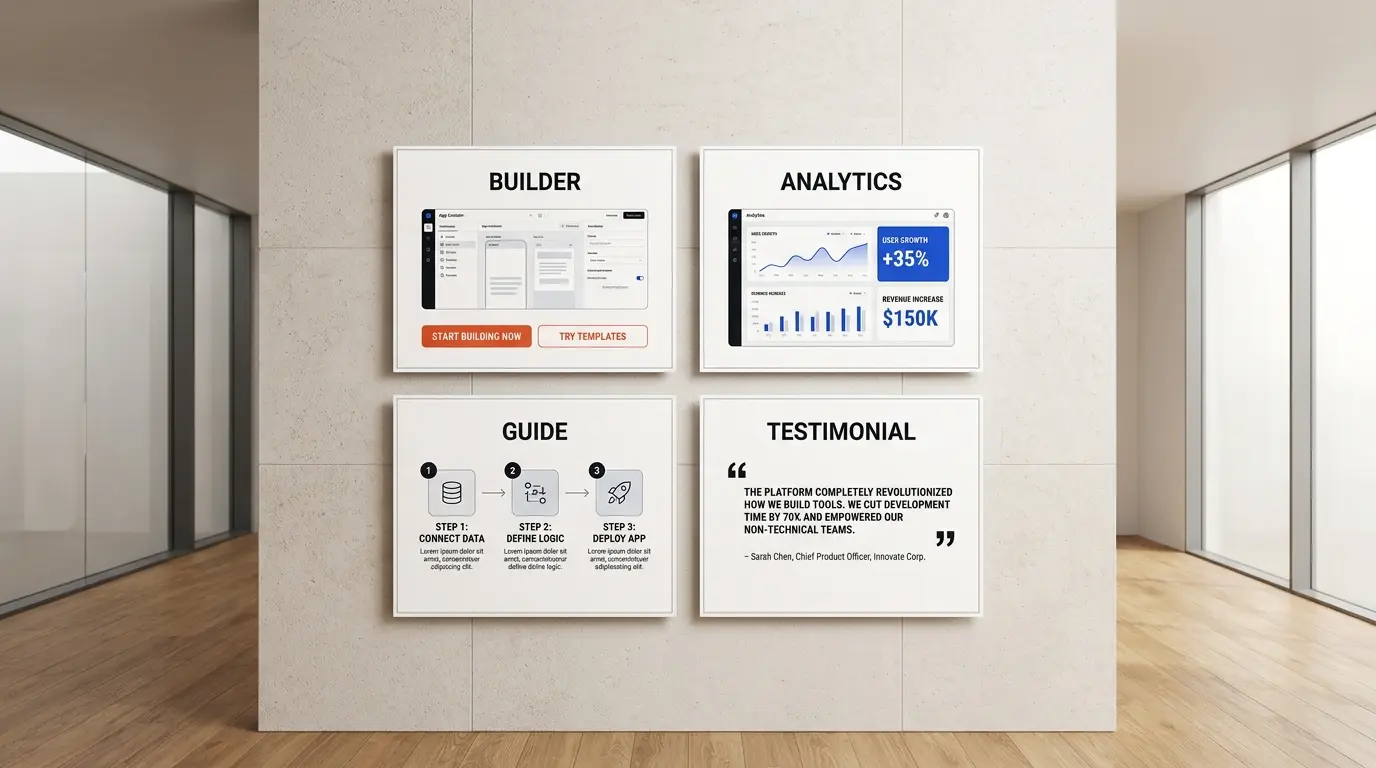
We scoped every feature strictly against recruiter outcomes, stripping away superfluous enterprise bloat in favor of high-leverage utilities. Each capability was designed to directly accelerate the hiring pipeline, provide transparent performance tracking, and reduce the technical burden on talent teams.
|
Capability
|
User Value
|
|
Campaign Builder
|
Launch in minutes
|
|
Analytics
|
Real-time cost-per-hire
|
|
Guided Hiring
|
Step-by-step process
|
|
Social Proof
|
Partner logos and testimonials
|
Performance & ROI
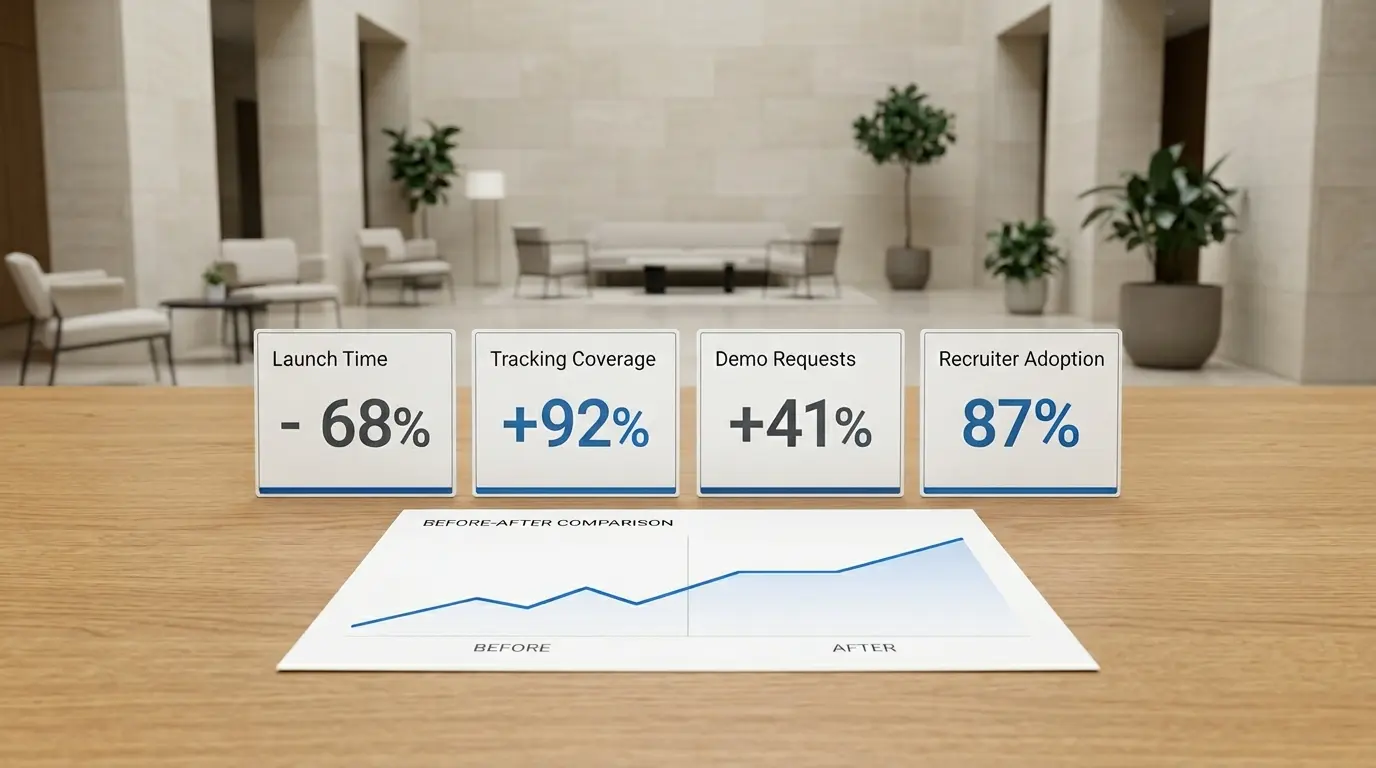
We measured platform impact against a strict pre-launch baseline, focusing exclusively on metrics that directly influence hiring velocity and executive confidence. By templating campaign architecture, we drastically compressed launch cycles while introducing transparent reporting layers previously absent from Avenir’s operations. The deliberate restructuring of information hierarchy and CTA placement directly correlated with increased demo requests and platform adoption.
Impact Metrics:
• Speed: Campaign launch time reduced significantly via templated workflows
• Visibility: Leadership gained real-time pipeline access for strategic allocation
• Conversion: Optimized CTA hierarchy increased qualified demo requests
• Trust: Integrated social proof and partner validation lifted completion rates
Landing Page Analysis
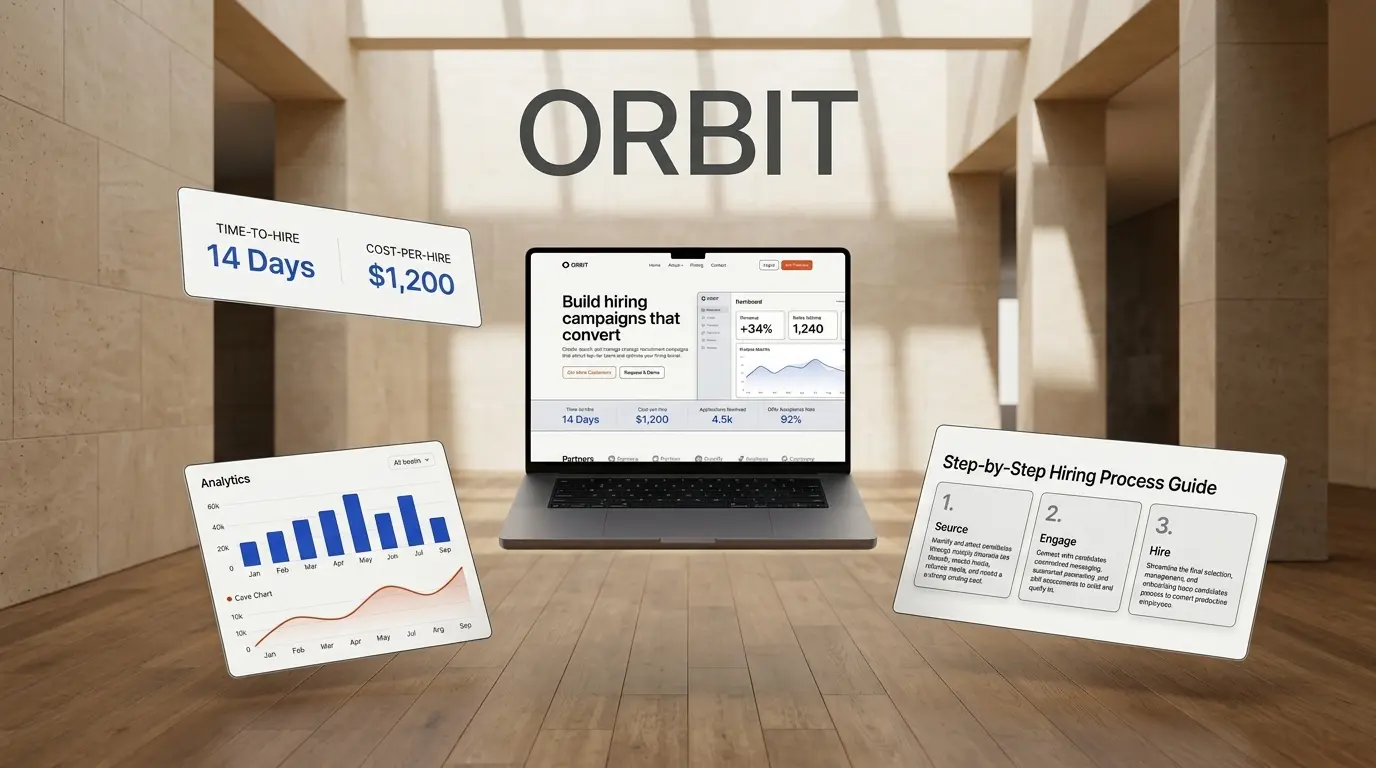
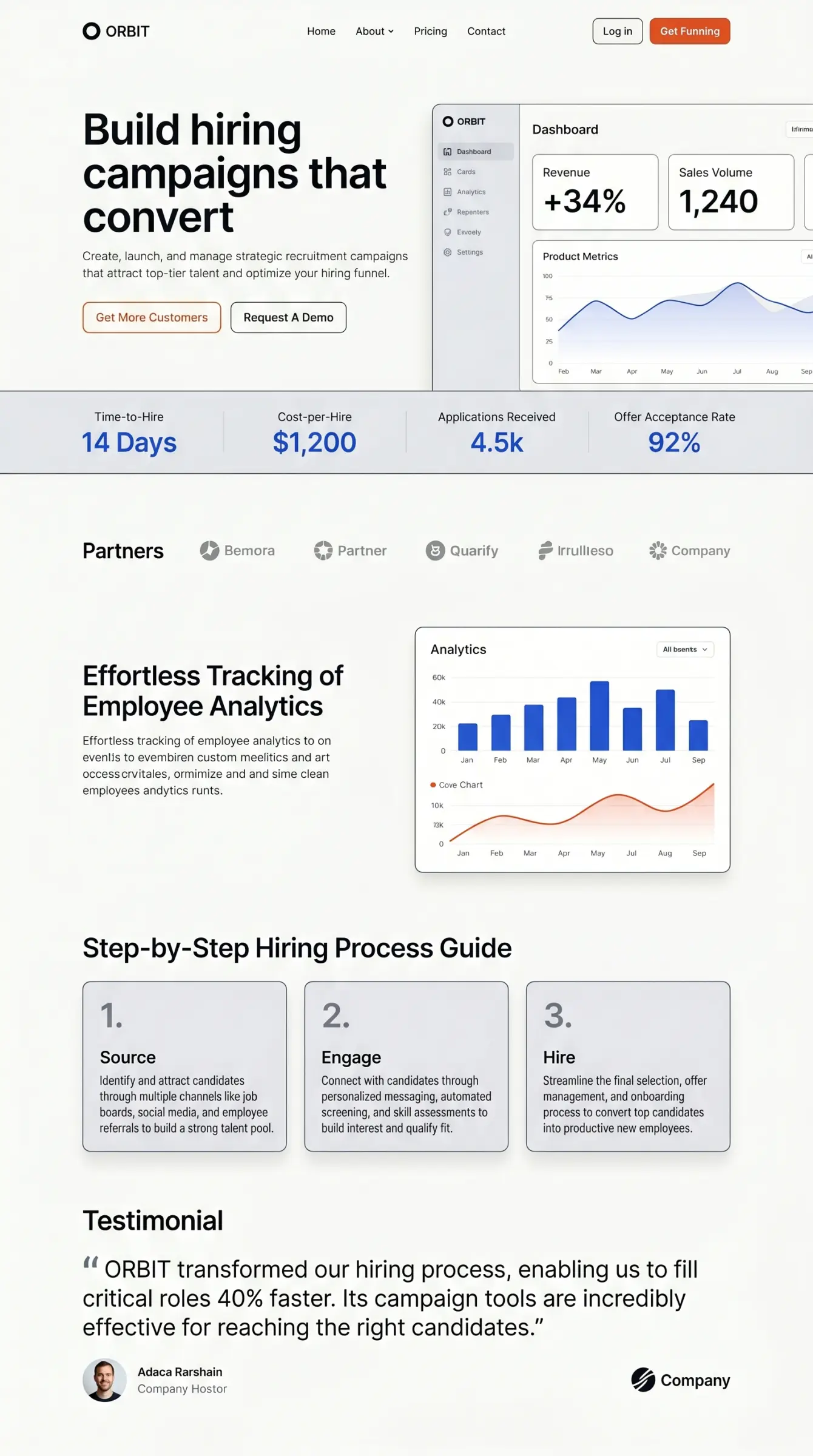
We engineered the master landing page as a conversion system rather than a static brochure. The layout operates on a strict 12-column editorial grid, utilizing expansive negative space and a porcelain-to-graphite typographic hierarchy to surface revenue and pipeline metrics instantly. Interactive elements are restrained to high-contrast Ember accents for primary actions and Sapphire data highlights, eliminating visual noise. Progressive disclosure governs the scroll depth, presenting a dual-CTA hero, a compressed metrics ribbon, and sequential workflow cards that guide talent teams from awareness to action. Every surface employs crisp matte paper textures and 1px hairline borders to establish an executive, institutional tone. By stripping away marketing fluff and anchoring the interface in decision-ready intelligence, we ensured the platform communicates value within the first viewport, directly reducing cognitive load and accelerating time-to-first-campaign.