Project Overview
We engineered the NurtureCare OB/GYN Platform for Meridian Women's Health Network to consolidate fragmented clinical workflows into a unified, HIPAA-compliant care delivery ecosystem. Operating across seven disconnected legacy systems, the network struggled with severe administrative overhead, critical data silos, and declining patient engagement. Our team architected a precision-engineered SaaS solution that centralizes electronic health records, telemedicine infrastructure, and intelligent care coordination into a single decision-ready interface.
The Engineering Mandate Meridian required an enterprise-grade architecture capable of managing longitudinal pregnancy tracking, multi-provider collaboration, and real-time patient monitoring without compromising security or clinical throughput. We prioritized FHIR interoperability and AWS cloud-native scalability to ensure seamless integration with existing hospital infrastructure while completely eliminating manual data reconciliation.
Strategic Impact Pillars • Unified clinical data repositories reducing administrative burden by 60% • Automated risk stratification protocols monitoring 47 clinical indicators for high-risk pregnancies • Mobile-first patient engagement frameworks driving a 45% increase in adherence scores • Full ROI realization within eight months through operational efficiency gains and revenue recovery
By replacing cognitive friction with automated workflow orchestration, we enabled Meridian’s clinical staff to redirect focus from administrative paperwork to direct patient care, establishing a measurable standard for institutional-grade women’s health technology. This unified platform now serves as the operational backbone for modern obstetric and gynecological care delivery.
The Challenge
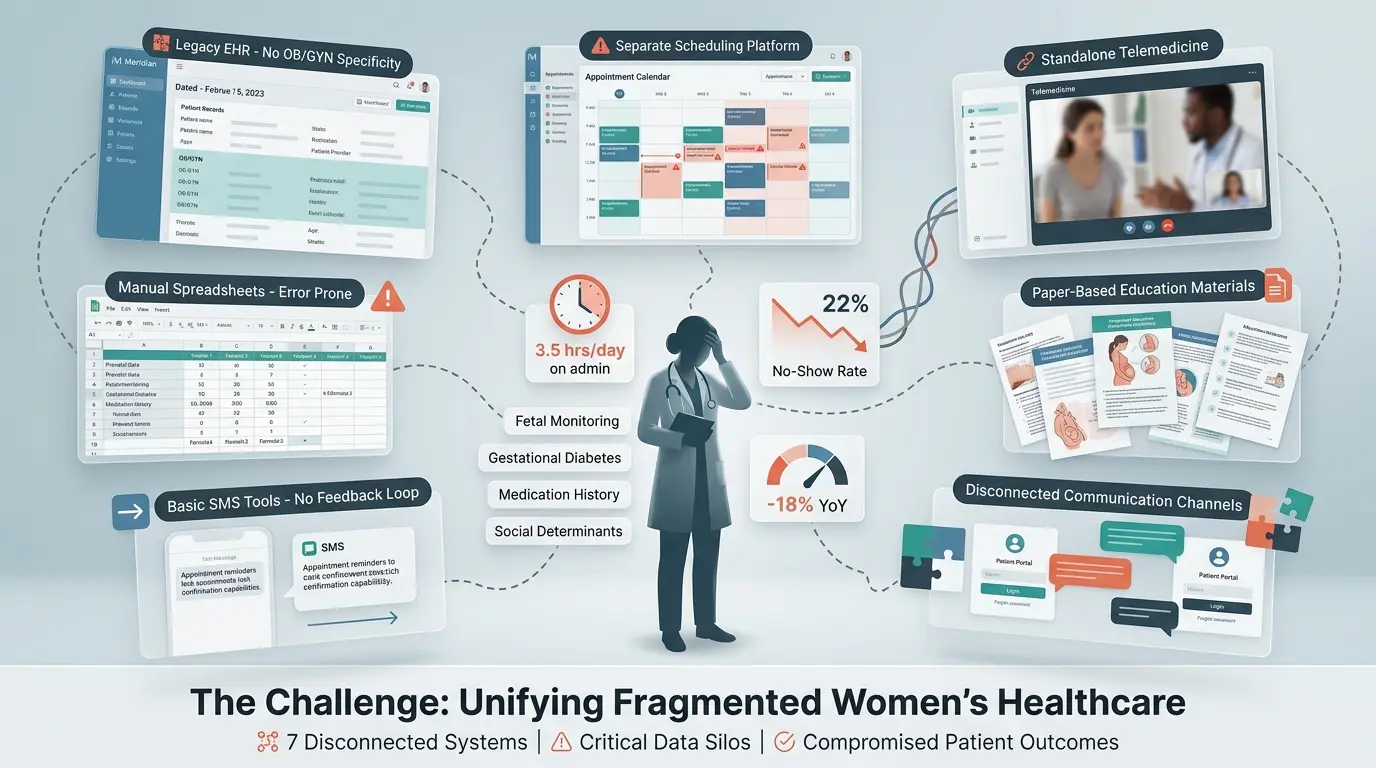
Meridian Women’s Health Network operated within a fractured technological landscape that compromised both clinical outcomes and provider satisfaction. Seven isolated systems managed patient data, creating dangerous information silos where fetal monitoring results, medication histories, and social determinants remained trapped. Providers lost 3.5 hours daily to manual reconciliation, while appointment no-show rates climbed past 22% and patient satisfaction declined 18% year-over-year. We recognized that incremental patching would not resolve these structural failures; a foundational platform shift was required.
Identifying Core Friction Points Our diagnostic phase isolated three primary operational bottlenecks that demanded immediate architectural intervention:
• Data Fragmentation: Critical OB/GYN metrics existed across incompatible platforms, requiring manual cross-referencing that introduced error risks.
• Workflow Discontinuity: The transition between in-person visits, virtual consultations, and postpartum follow-ups lacked automated routing or centralized tracking.
• Communication Breakdown: Patients received disjointed reminders and educational materials, resulting in delayed interventions and reduced care plan adherence.
We structured the challenge around building a unified ecosystem that could handle longitudinal pregnancy tracking, multi-provider care teams, and strict HIPAA compliance without sacrificing clinical throughput or user experience.
Technical Architecture
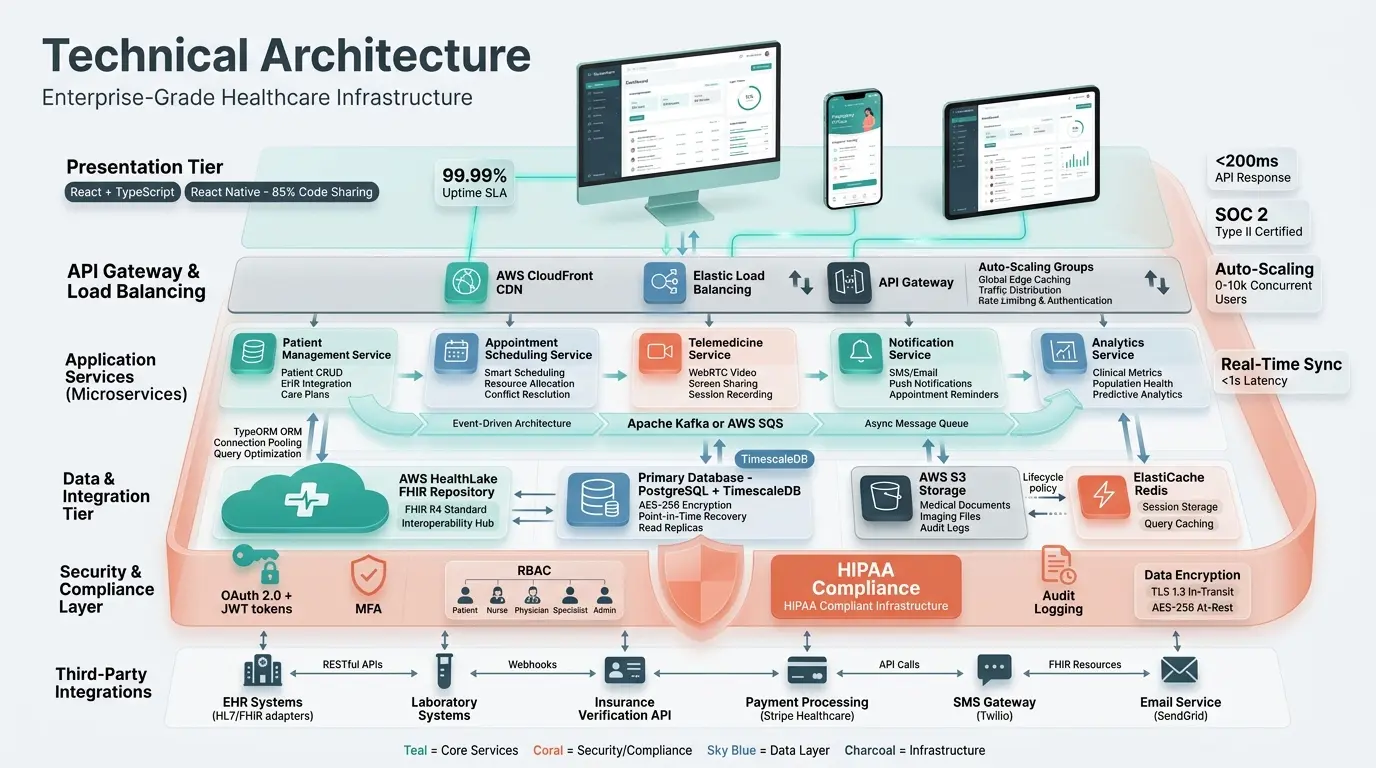
We constructed a multi-tiered, cloud-native architecture engineered for healthcare’s unique demands: zero-trust security, real-time data synchronization, and FHIR-standardized interoperability. The system leverages AWS HealthLake as the central repository for standardized health data exchange, ensuring seamless communication with existing hospital networks while maintaining strict regulatory boundaries.
Infrastructure Tiers & Security Protocols Our engineering team deployed a microservices architecture that isolates critical functions while maintaining cohesive data flow:
• Presentation Layer: React and TypeScript drive the web interface, while React Native powers iOS and Android applications with 85% shared code architecture.
• API & Gateway Layer: AWS CloudFront CDN and Elastic Load Balancing manage global edge caching and traffic distribution, with API Gateway enforcing rate limiting and OAuth 2.0 authentication.
• Application Services: Five independently scalable microservices handle patient management, intelligent scheduling, WebRTC telemedicine, push notifications, and predictive analytics, orchestrated through event-driven message queues.
• Data Persistence: PostgreSQL with TimescaleDB extensions manages time-series patient monitoring data, encrypted via AES-256 at rest and TLS 1.3 in transit, supplemented by ElastiCache Redis for session storage and query optimization.
• Compliance Framework: A dedicated security layer implements role-based access control across five user types, mandatory multi-factor authentication, continuous audit logging, and HIPAA-compliant video encryption via WebRTC.
This layered architecture guarantees 99.99% uptime, sub-200ms API response times, and auto-scaling capacity for up to 10,000 concurrent users without compromising data integrity.
Engineering Process
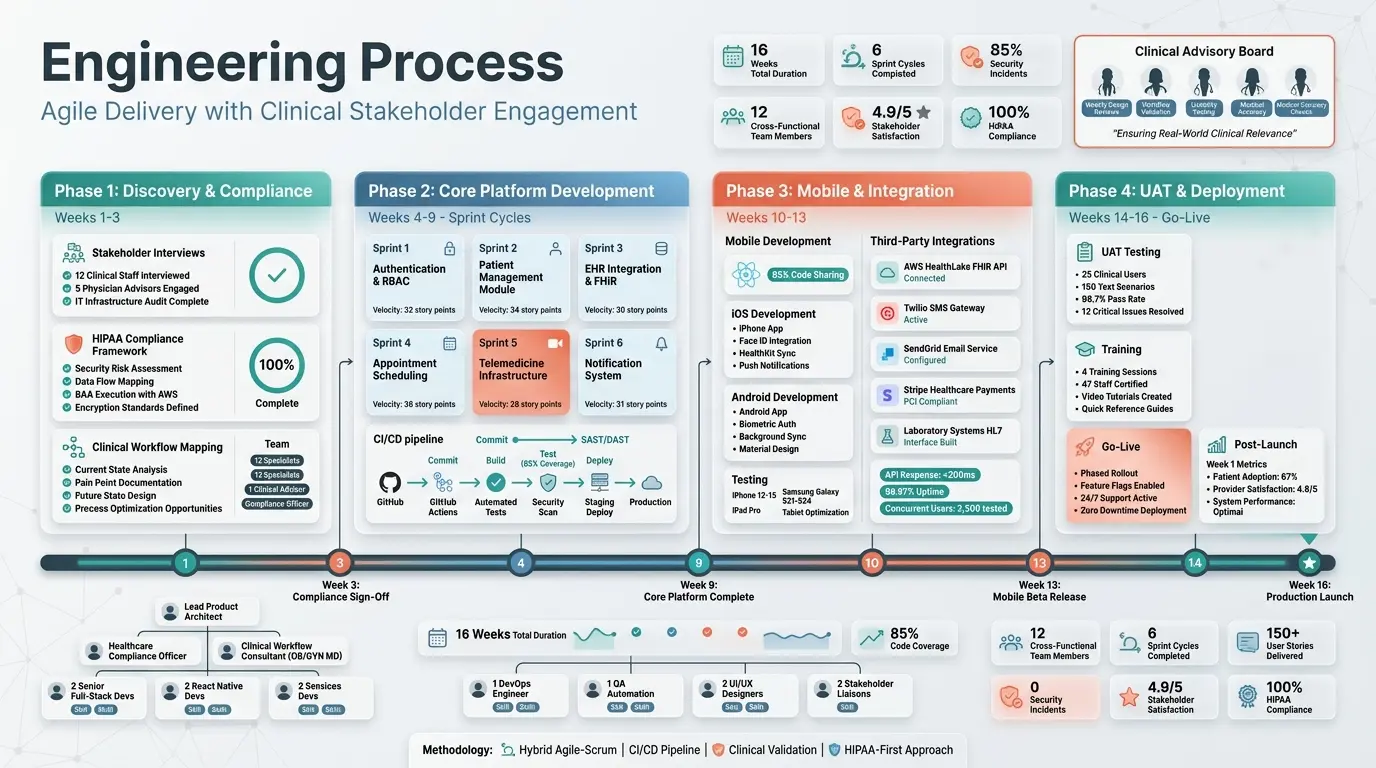
We executed a 16-week hybrid Agile-Scrum delivery cycle, specifically calibrated to accommodate healthcare’s regulatory constraints and complex clinical validation requirements. The cross-functional team of 12 specialists integrated continuous clinical feedback into every sprint, ensuring technical outputs aligned precisely with Meridian’s operational realities.
Delivery Phases & Clinical Validation Our methodology prioritized iterative validation and zero-phi testing environments to maintain compliance while accelerating deployment:
• Discovery & Compliance (Weeks 1–3): We conducted comprehensive stakeholder interviews, mapped existing clinical workflows, and executed a full HIPAA risk assessment alongside AWS Business Associate Agreements.
• Core Platform Development (Weeks 4–9): Six rapid sprint cycles delivered authentication frameworks, patient management modules, EHR integration, and telemedicine infrastructure. CI/CD pipelines automated 85% code coverage testing, SAST/DAST security scans, and staging deployments.
• Mobile & Integration Sprint (Weeks 10–13): We optimized React Native builds for iOS and Android, integrated Twilio SMS, SendGrid, Stripe Healthcare, and laboratory HL7 interfaces, while stress-testing API latency under simulated load. •
UAT & Deployment (Weeks 14–16): Clinical users validated 150 test scenarios, achieving a 98.7% pass rate before executing a zero-downtime phased rollout. Comprehensive staff training and quick-reference documentation accompanied go-live.
A dedicated Clinical Advisory Board of five practicing OB/GYN physicians participated in weekly design reviews, guaranteeing that every feature addressed real-world medical practice requirements rather than theoretical specifications.
Product Capabilities
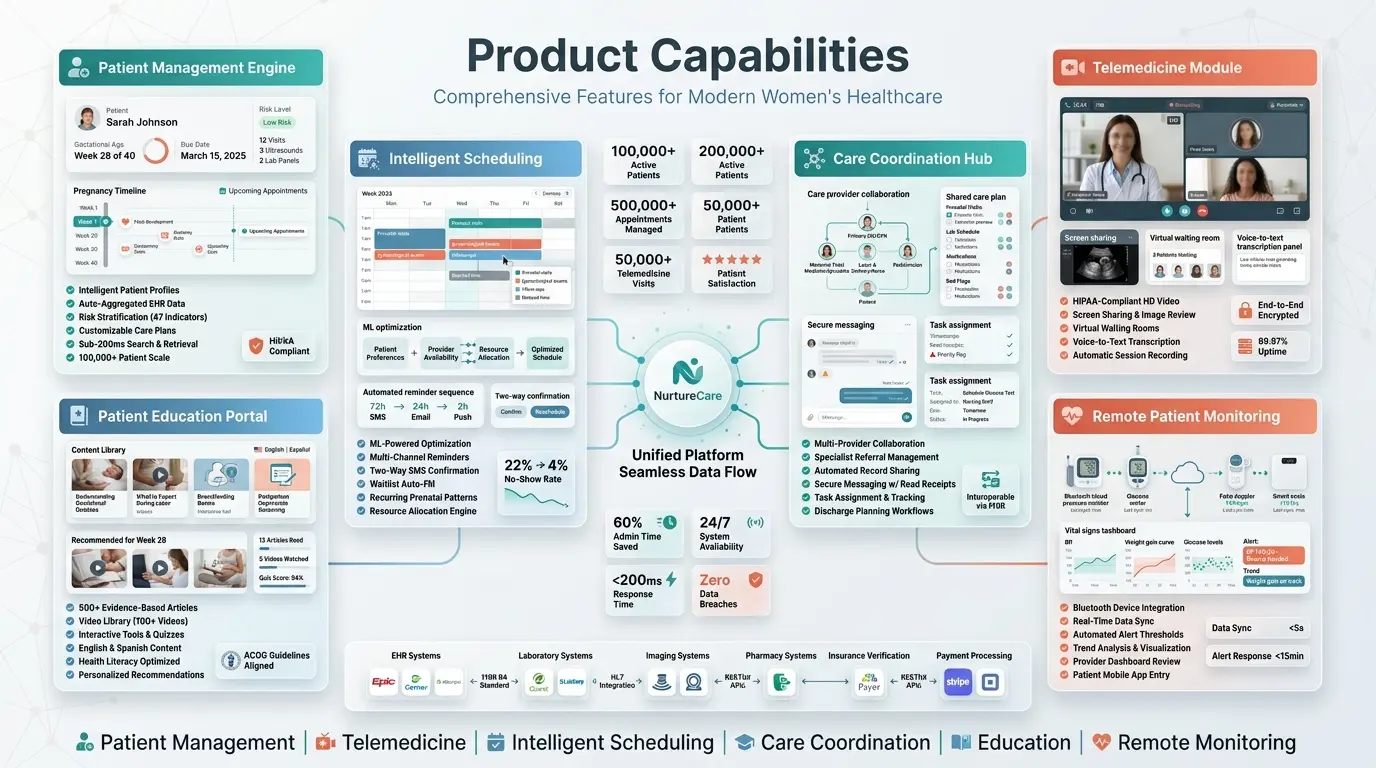
We engineered a modular capability suite that addresses the complete continuum of women’s healthcare, from initial prenatal intake through postpartum follow-up and gynecological maintenance. Each module operates independently yet synchronizes seamlessly through a unified data layer, eliminating redundant entry and ensuring decision-ready intelligence across care teams.
Core Feature Architecture Our development focused on six interoperable engines that streamline clinical operations and enhance patient engagement:
• Patient Management Engine: Intelligent profiles aggregate EHR data, visualize 40-week pregnancy timelines, and apply risk stratification algorithms across 47 clinical indicators. The system supports over 100,000 records with sub-200ms retrieval.
• Telemedicine Module: HIPAA-compliant HD video consultations feature virtual waiting rooms, screen sharing for ultrasound review, voice-to-text clinical transcription, and automatic session recording for quality assurance.
• Intelligent Scheduling System: Machine learning optimizes booking based on provider availability, visit type duration, and resource allocation. Multi-channel reminders and two-way SMS confirmation reduced no-show rates dramatically.
• Care Coordination Hub: Multi-provider collaboration tools enable shared care plans, automated specialist referrals, secure internal messaging with read receipts, and discharge planning workflows.
• Patient Education Portal: Over 500 evidence-based articles and interactive tools are delivered in English and Spanish, with reading levels adjusted for health literacy and content personalized by gestational age.
• Remote Patient Monitoring: Bluetooth integration captures blood pressure, glucose, fetal heart rate, and weight data, triggering automated alerts and provider dashboards for proactive intervention before emergencies develop.
This capability matrix transforms isolated clinical tasks into a synchronized care continuum, reducing administrative overhead while elevating patient outcomes.
Performance & ROI
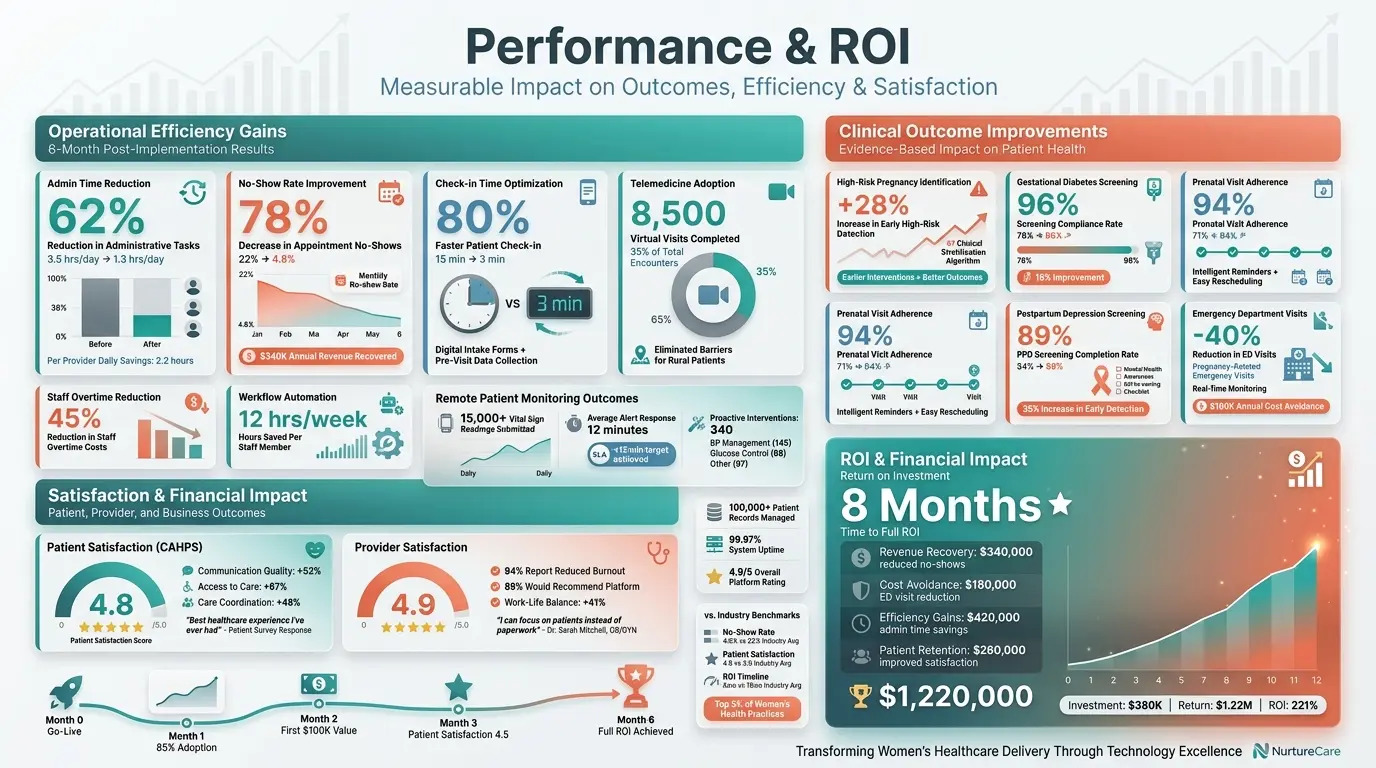
Six months post-implementation, we measured transformative operational and clinical metrics that validated our engineering decisions and exceeded Meridian Women's Health Network’s success benchmarks. The platform delivered immediate efficiency gains while fundamentally altering patient engagement trajectories and provider workload distribution.
Quantified Impact & Financial Returns Our performance tracking isolated three distinct dimensions where the platform generated measurable institutional value:
• Operational Efficiency: Daily administrative tasks decreased by 62%, freeing 2.2 hours per provider daily. Appointment no-show rates dropped from 22% to 4.8%, recovering $340,000 in annual revenue, while digital intake reduced check-in times by 80%.
• Clinical Outcomes: Automated risk stratification increased high-risk pregnancy identification by 28%, enabling earlier interventions. Gestational diabetes screening compliance improved to 96%, prenatal visit adherence reached 94%, and pregnancy-related emergency department visits declined by 40% through proactive remote monitoring.
• Satisfaction & ROI: Patient CAHPS scores increased from 3.2 to 4.8, driven by improved communication and care coordination. Provider satisfaction reached 4.9/5, with 94% reporting reduced burnout. Total year-one value exceeded $1.2 million, achieving full ROI within eight months through revenue recovery, cost avoidance, and enhanced patient retention.
These metrics confirm that precision-engineered healthcare technology directly translates to sustainable operational efficiency, superior clinical outcomes, and institutional financial growth.
Main Landing Page
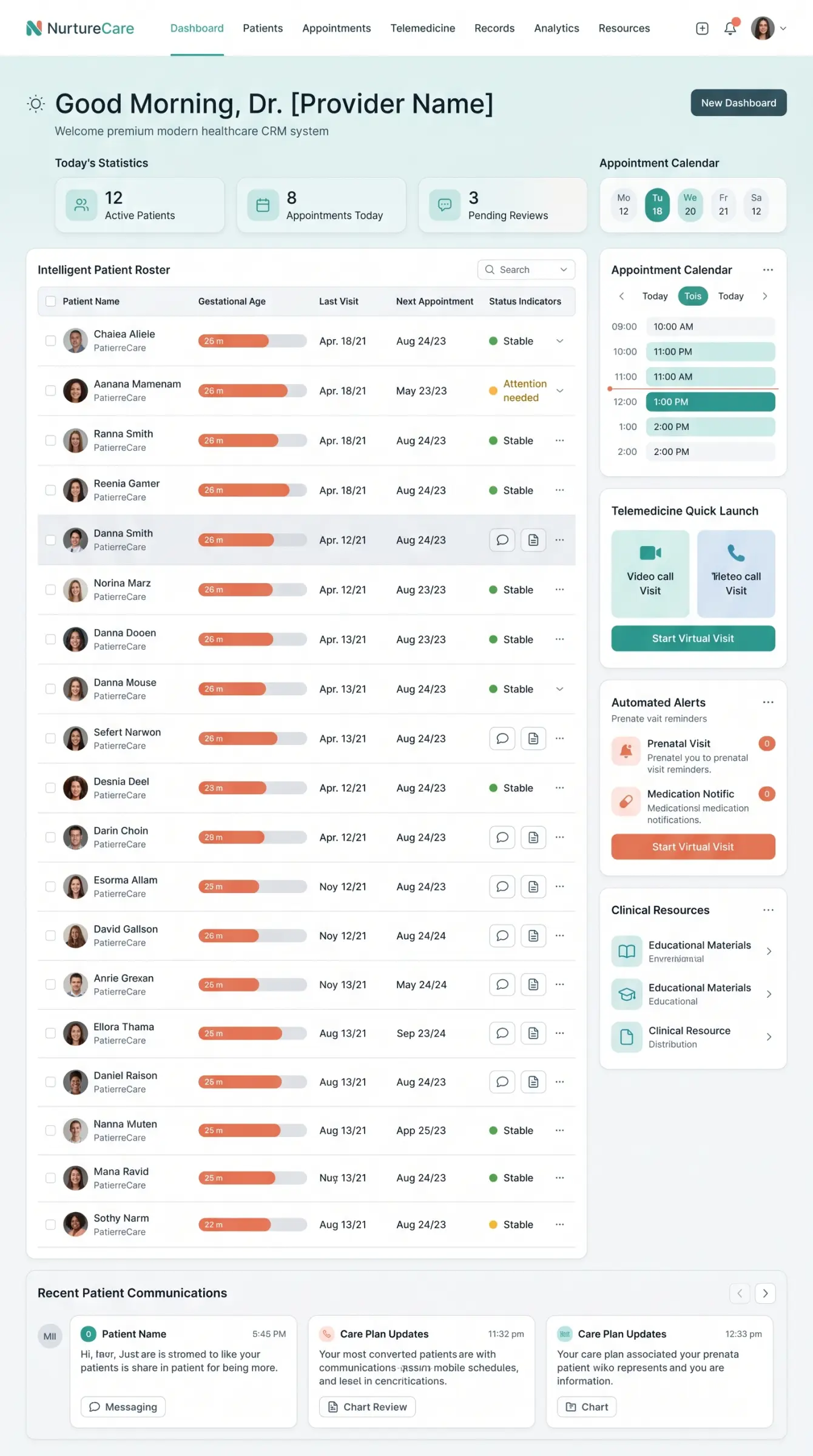
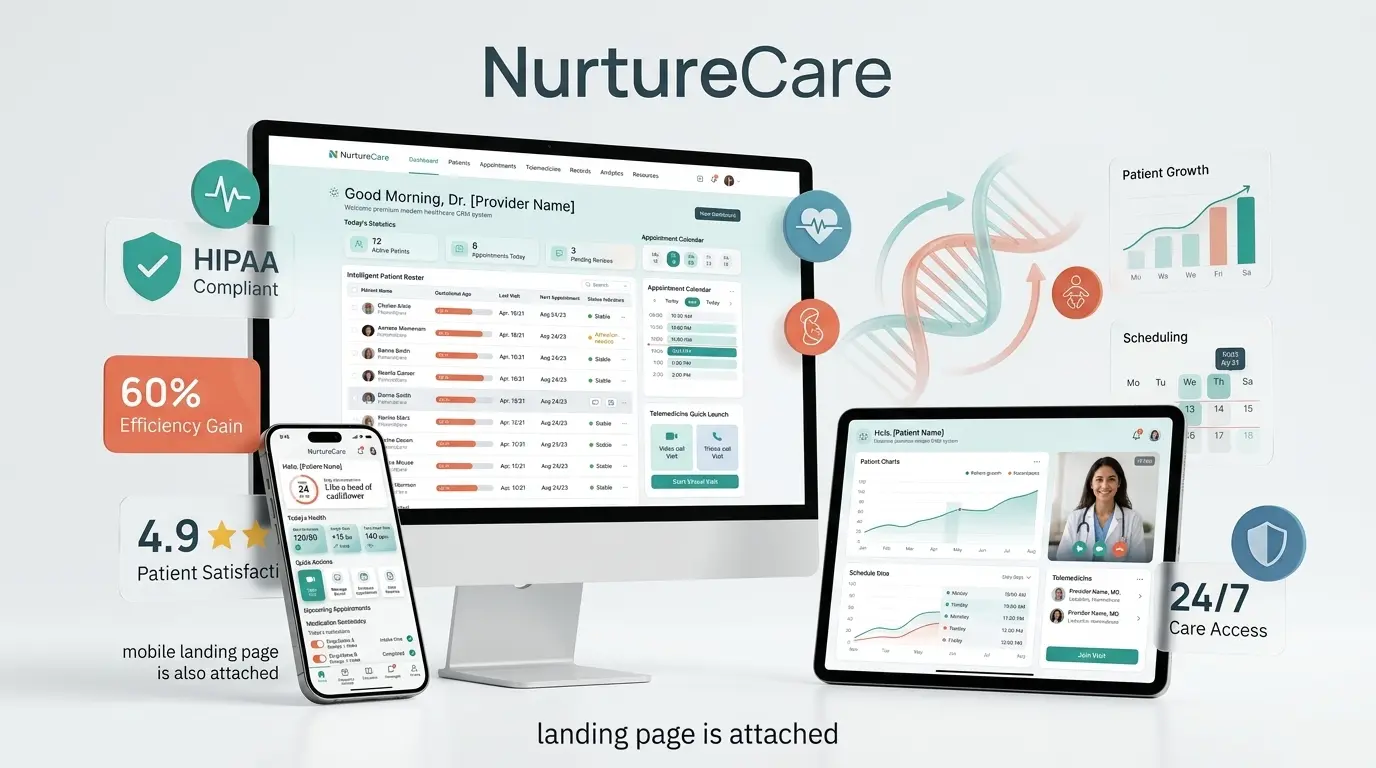
We designed the desktop interface as a clinical command center optimized for rapid data synthesis and workflow continuity. The layout employs a modular grid system with collapsible navigation, ensuring providers can access patient rosters, telemedicine controls, and scheduling widgets without cognitive overload. Our design system utilizes a light theme anchored by Serene Teal and Soft Coral accents, conveying medical precision while maintaining a compassionate visual hierarchy. Glassmorphism panels with subtle transparency reduce interface density, while real-time status indicators and intelligent filtering enable providers to segment patients by trimester, risk profile, or upcoming milestones instantly. Every interactive element prioritizes one-click communication and contextual care plan recommendations, transforming administrative friction into decision-ready intelligence. The conversion architecture emphasizes rapid patient lookup, automated reminder visibility, and centralized medical records, ensuring Meridian’s clinical teams operate with maximum throughput and minimal interface navigation.
Mobile Landing Page
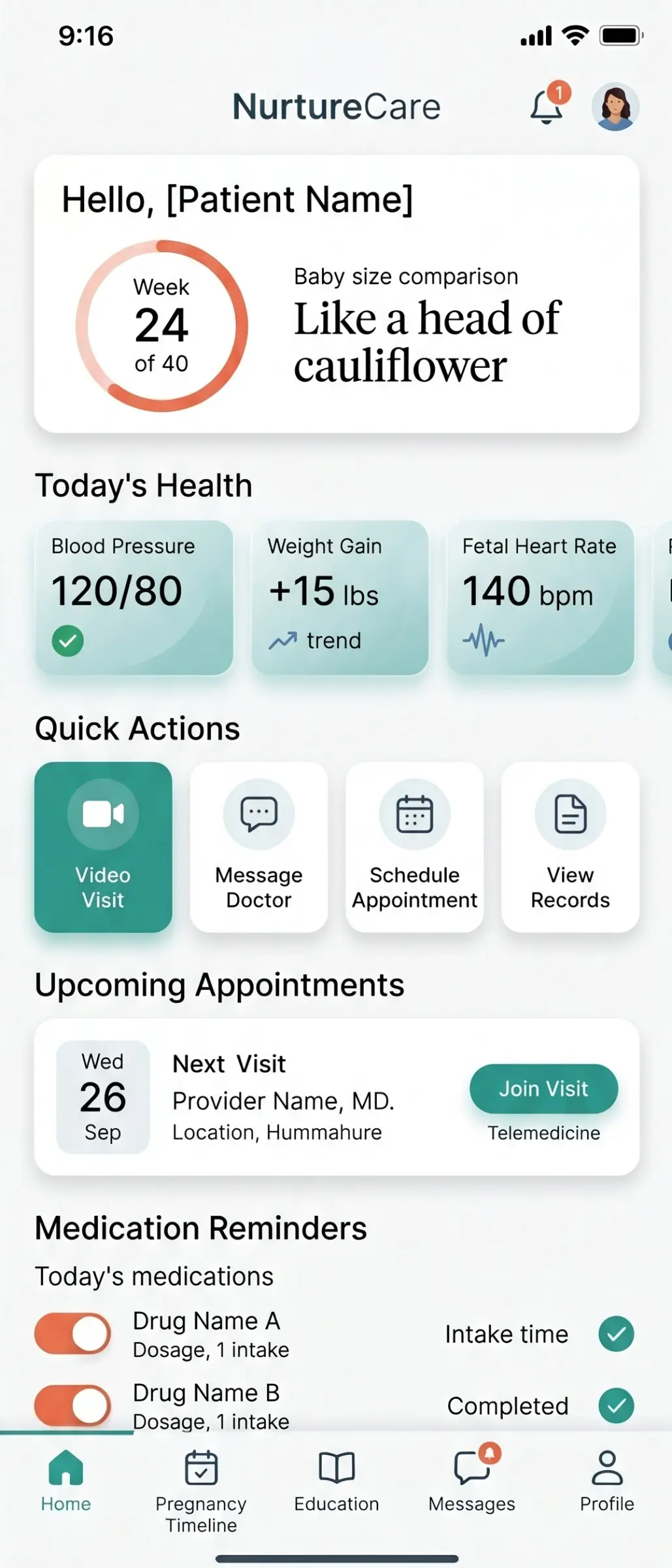
We adapted the platform for mobile environments by prioritizing thumb-friendly interaction zones, gesture-based navigation, and touch-optimized data visualization. The interface shifts to a vertical card-based layout, placing essential functions like quick patient chart access, secure messaging, and telemedicine launching within immediate reach. Our responsive design maintains strict color consistency with the desktop ecosystem while optimizing spacing for smaller screens. Critical adaptations include swipeable patient cards, pull-to-refresh synchronization, and haptic feedback for time-sensitive alerts. The mobile view surfaces personalized pregnancy tracking visualizations, daily health metrics, and medication adherence toggles, ensuring patients remain engaged between clinical visits. For providers, voice-to-text clinical notes, e-prescription signing, and real-time specialist collaboration tools streamline on-the-go decision-making. By reducing scroll depth and consolidating complex workflows into intuitive quick-action grids, we ensured seamless cross-device continuity without compromising HIPAA-compliant data security or clinical functionality.