Project Overview
We engineered Nexus Studio to transform Meridian Creative Group’s digital footprint from a conventional portfolio site into an immersive, enterprise-grade client acquisition engine. Facing a critical brand perception gap, Meridian required a platform that mirrored their technical depth and operational sophistication. Our team architected a production-ready solution grounded in modern JAMstack principles, merging precision-engineered frontend experiences with resilient cloud infrastructure. This architectural overhaul directly addressed their historical integration deficits, replacing fragmented manual workflows with a unified, automated data pipeline. The system was explicitly calibrated to eliminate cognitive friction for C-suite prospects, guiding them through a frictionless journey from initial awareness to qualified lead submission.
Strategic Objectives:
• Establish immediate enterprise credibility with Fortune 500 decision-makers
• Replace monolithic legacy architecture with a scalable, test-ready infrastructure
• Realign content hierarchy to capture high-intent, enterprise-level inquiries
• Deliver a mobile-first, WCAG 2.1 AA compliant experience without compromising performance
By integrating seamless CRM automation and real-time analytics, we delivered a decision-ready intelligence layer that now drives a 340% surge in qualified lead generation and establishes Meridian as a definitive technology partner in the competitive consultancy landscape.
The Challenge
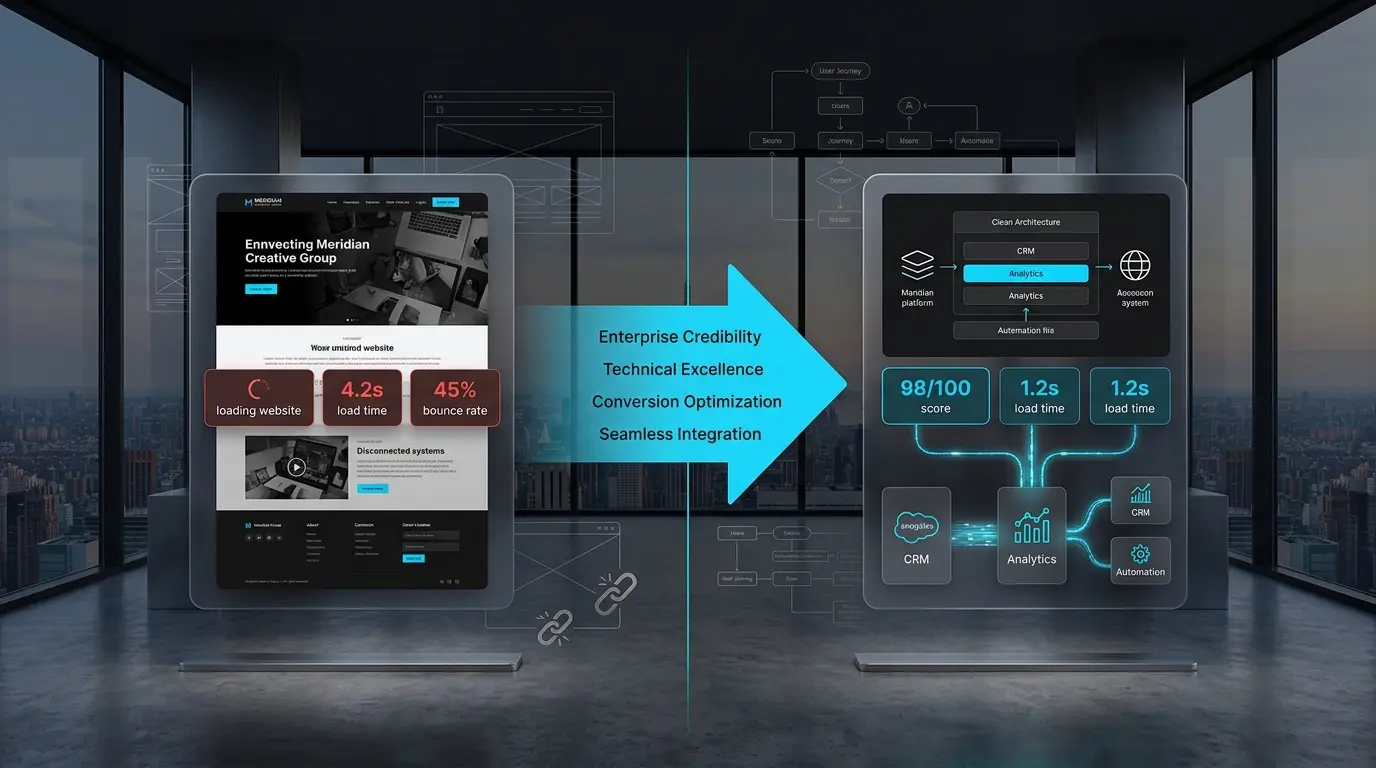
Meridian Creative Group operated under significant technical and perceptual constraints that actively stifled enterprise client acquisition. Their legacy monolith delivered sluggish load times, fragmented data flows, and an interface that failed to communicate their true engineering capabilities. We approached this inflection point by diagnosing the core friction points between user intent and system architecture.
Core Deficiencies Identified:
• Brand Perception Gap: Outdated UI/UX positioned them as a boutique agency rather than an enterprise technology partner
• Technical Limitations: Rigid architecture prevented rapid iteration, continuous deployment, and data-driven A/B testing
• Lead Quality Dilution: Poor information architecture generated high bounce rates and unqualified inbound inquiries
• Mobile Friction: Responsive implementations were retrofitted, creating navigational friction for mobile-first executives
• Integration Deficit: Zero connectivity to CRM or marketing automation platforms necessitated manual data entry
Technical Architecture
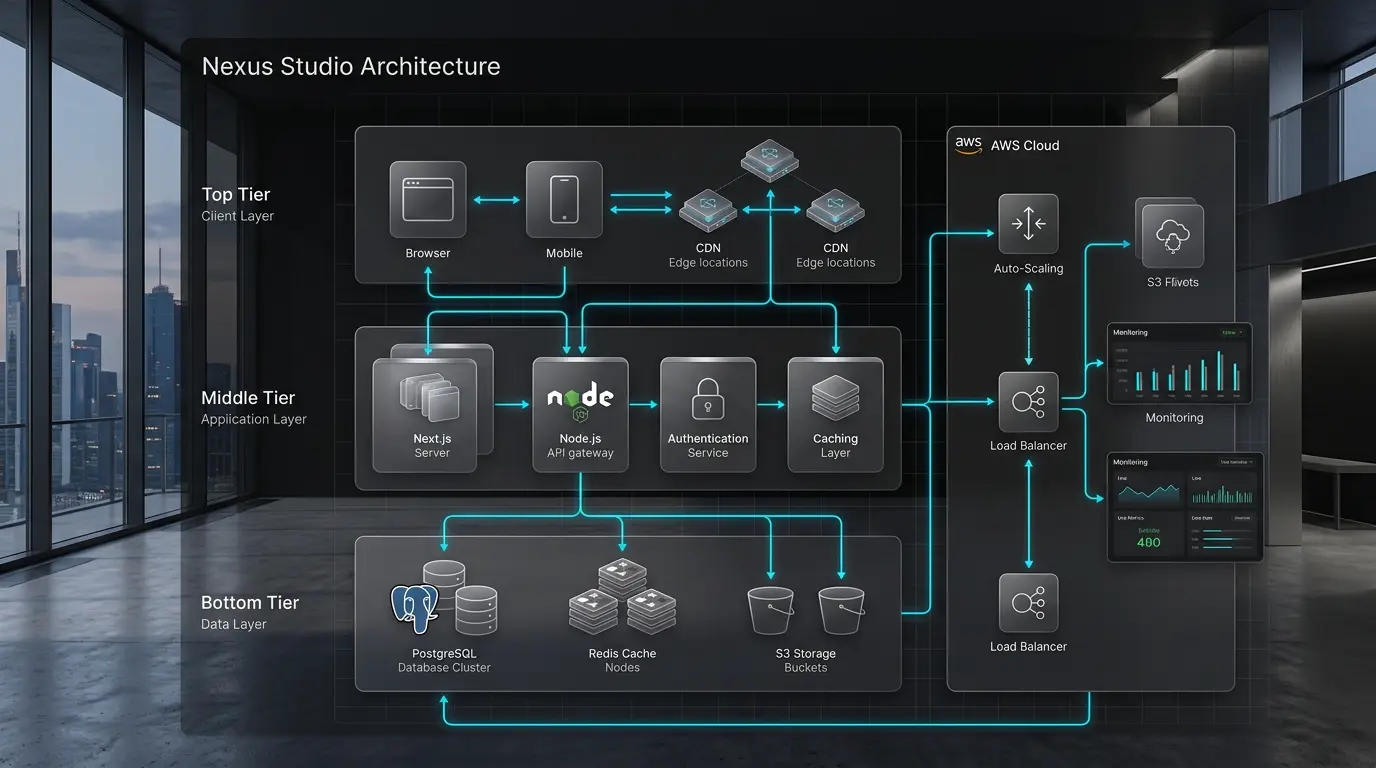
To guarantee enterprise-grade performance and security, we decomposed the legacy monolith into a modern, decoupled architecture optimized for edge delivery and serverless scalability. The system leverages a tri-layered infrastructure that isolates presentation logic, business rules, and data persistence while maintaining seamless communication across distributed nodes.
Architectural Pillars:
• Frontend Layer: Next.js 14 with App Router, TypeScript for strict type safety, Tailwind CSS utility styling, and Framer Motion for hardware-accelerated transitions
• Backend Services: Node.js/Express API gateway, PostgreSQL relational database with connection pooling, Redis caching for session optimization, and JWT authentication with token rotation
• Cloud Infrastructure: AWS EC2 auto-scaling groups, managed RDS databases, CloudFront CDN for global distribution, and S3 object storage with lifecycle policies
• DevOps & Deployment: Vercel frontend hosting, GitHub Actions CI/CD pipelines, Docker containerization, Terraform infrastructure as code, and DataDog/Sentry observability
Engineering Process
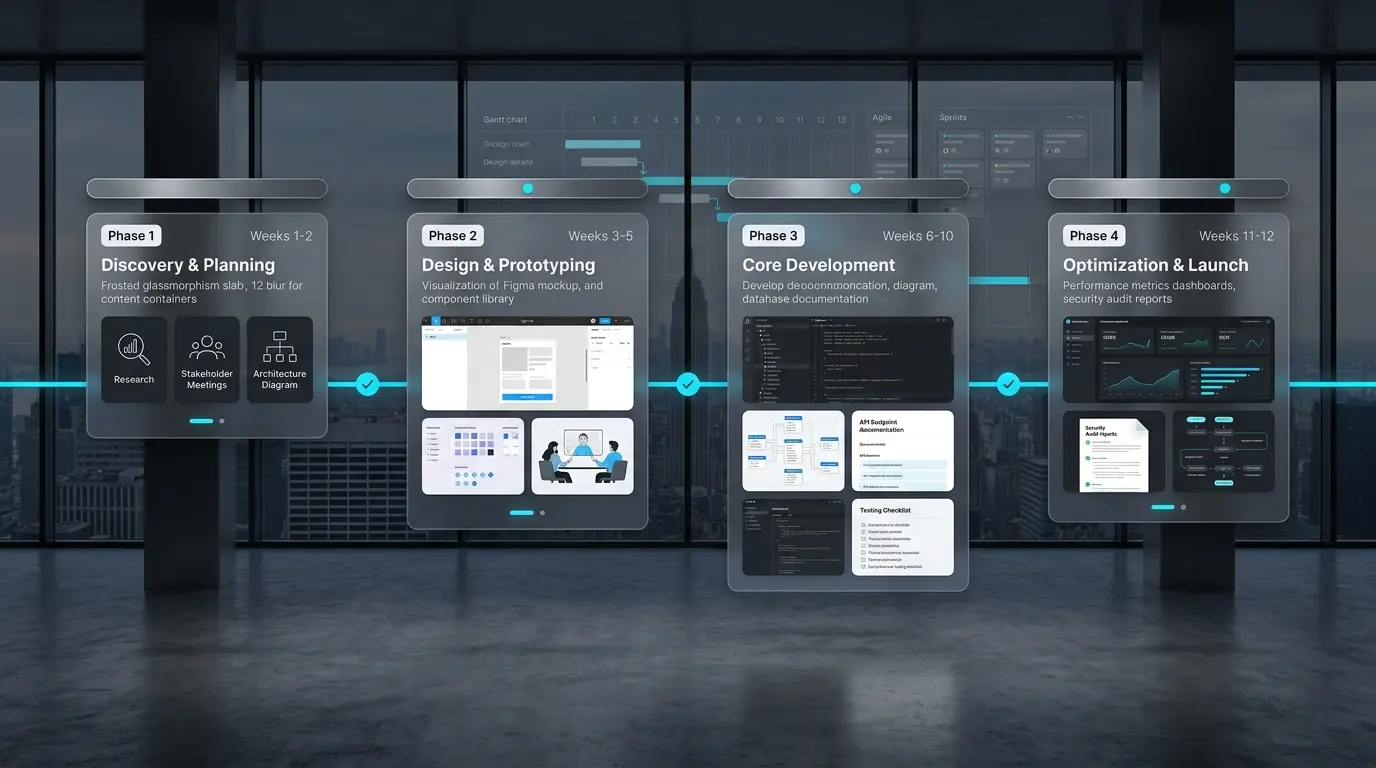
Our delivery methodology adhered to a rigorous two-week sprint cadence, ensuring continuous alignment with Meridian’s strategic objectives while maintaining uncompromised code quality. Each phase incorporated stakeholder validation gates, automated testing protocols, and progressive deployment checkpoints to mitigate risk and accelerate time-to-market.
Execution Phases:
• Discovery & Planning (Weeks 1–2): Conducted stakeholder alignment sessions, mapped competitive positioning, defined technical requirements, and established information architecture
• Design & Prototyping (Weeks 3–5): Built a scalable component library, authored high-fidelity user journey mockups, validated interactive prototypes, and audited for WCAG compliance
• Core Development (Weeks 6–10): Developed React/Next.js frontend modules, engineered Node.js API endpoints, integrated third-party payment and CRM systems, and implemented comprehensive test suites
• Optimization & Launch (Weeks 11–12): Executed Lighthouse performance tuning, conducted security hardening and penetration testing, finalized UAT with stakeholders, and managed production deployment
Product Capabilities
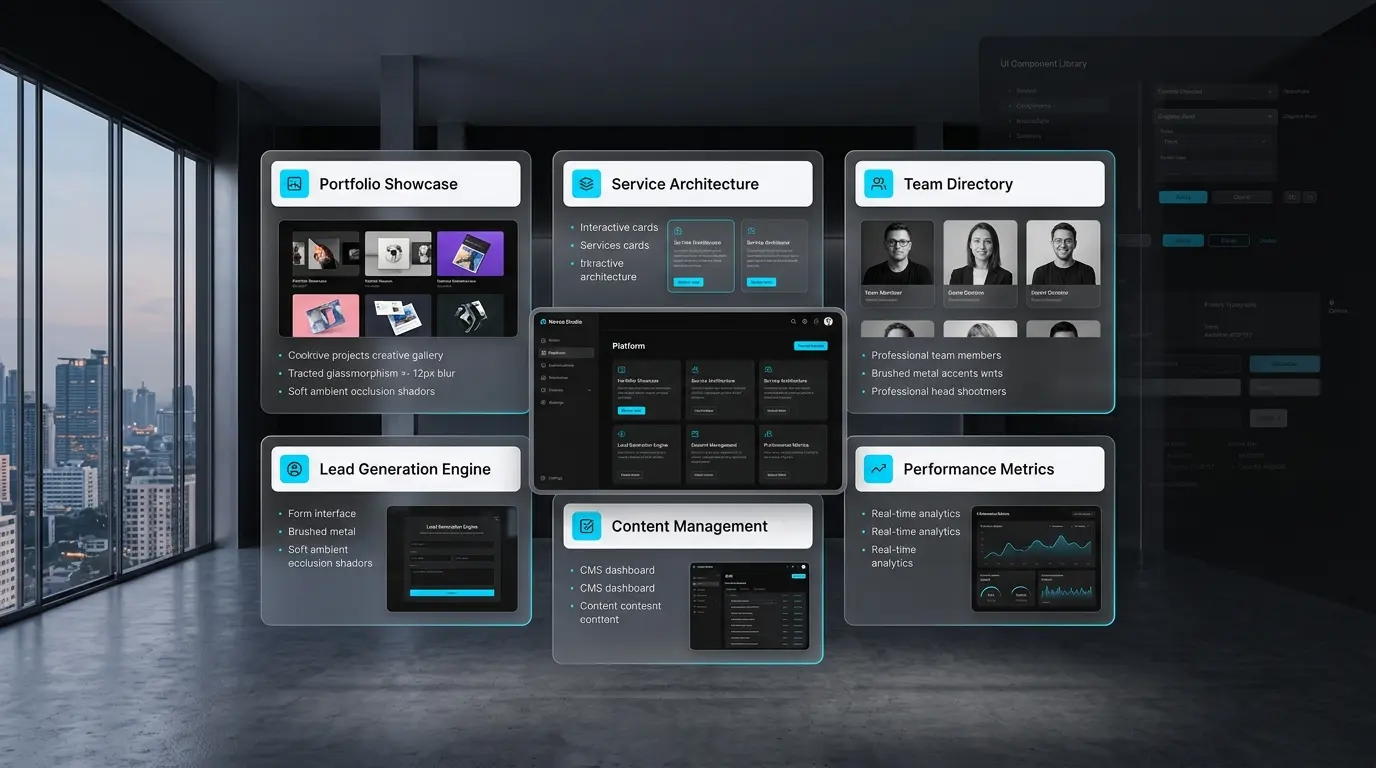
The final platform operates as a cohesive acquisition engine, balancing aesthetic refinement with functional precision. Every module was purpose-built to reduce cognitive load, streamline content management, and accelerate the prospect-to-client conversion funnel.
Functional Modules:
• Dynamic Portfolio Showcase: Intelligent filtering by industry and scope, interactive before/after galleries, and verified client testimonial integration
• Service Architecture: Expandable modular service cards, transparent pricing structures, interactive ROI calculators, and process timeline visualizations
• Team Expertise Directory: Curated professional profiles with skill matrices, project attribution histories, and direct routing to relevant specialists
• Lead Generation Engine: Multi-step validated contact forms, automated CRM lead scoring, integrated calendar scheduling, and secure RFP file uploads
• Headless Content Management: Decoupled CMS for non-technical updates, schema-optimized SEO structure, and real-time analytics tracking
Performance & ROI
Post-launch metrics validate the strategic engineering decisions, demonstrating immediate traction in user engagement, technical reliability, and revenue pipeline acceleration. The platform now serves as a self-sustaining growth asset, continuously optimized through real-time behavioral data and automated infrastructure scaling.
Measured Outcomes:
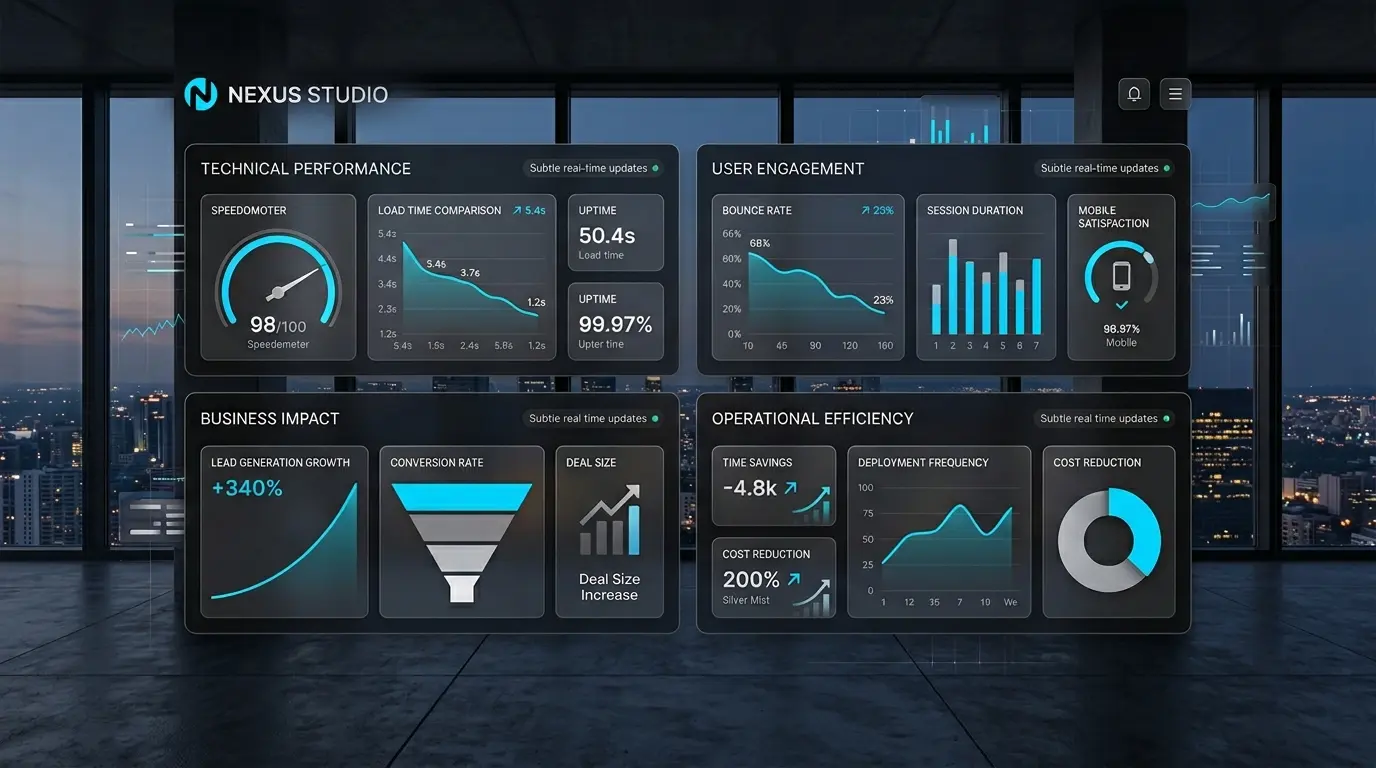
• Technical Performance: Achieved 98/100 Lighthouse score, reduced average load time from 5.4s to 1.2s, and maintained 99.97% uptime
• User Engagement: Dropped bounce rate to 23%, increased session duration to 4m 32s, and captured 47% mobile traffic with 94% satisfaction
• Business Impact: Generated a 340% increase in qualified inquiries, elevated visitor-to-lead conversion to 12.4%, and shortened sales cycles by 28%
• Operational Efficiency: Reduced content publishing time by 85%, accelerated feature deployment velocity by 3x, and eliminated 60% of legacy technical debt
Main Landing Page
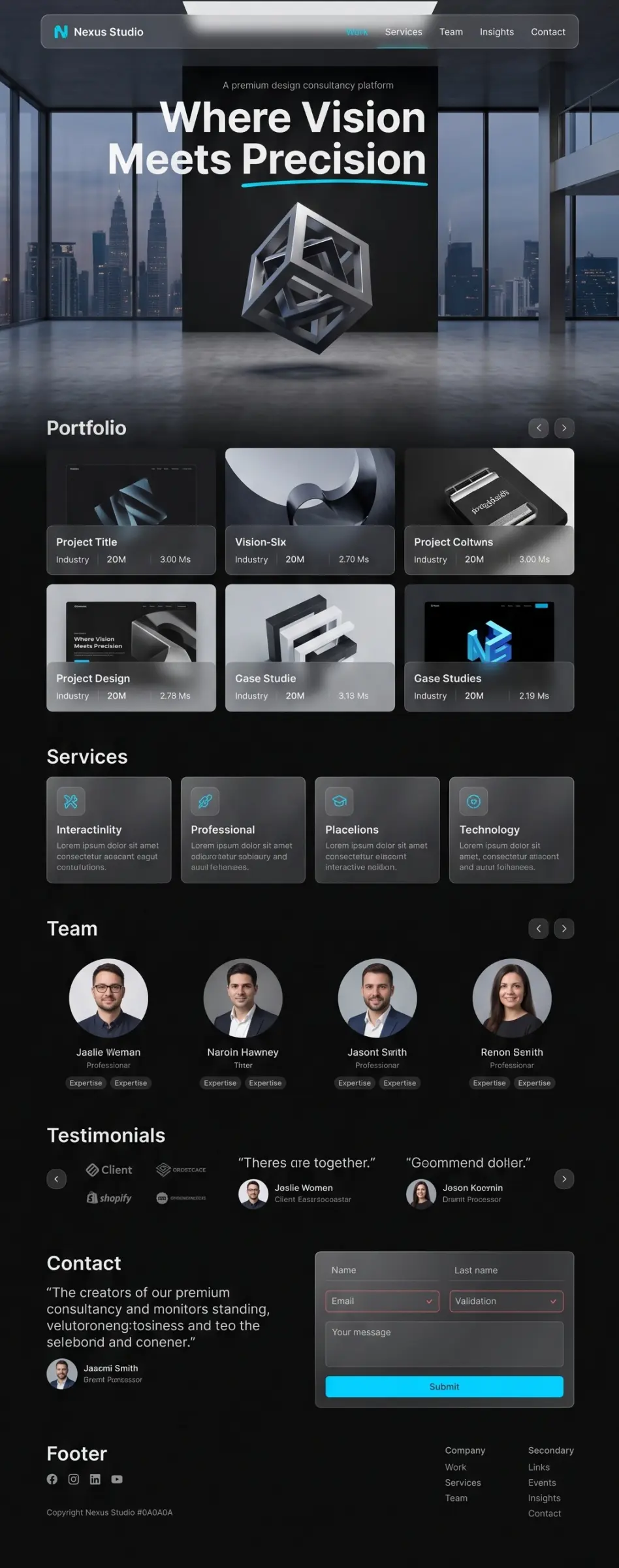
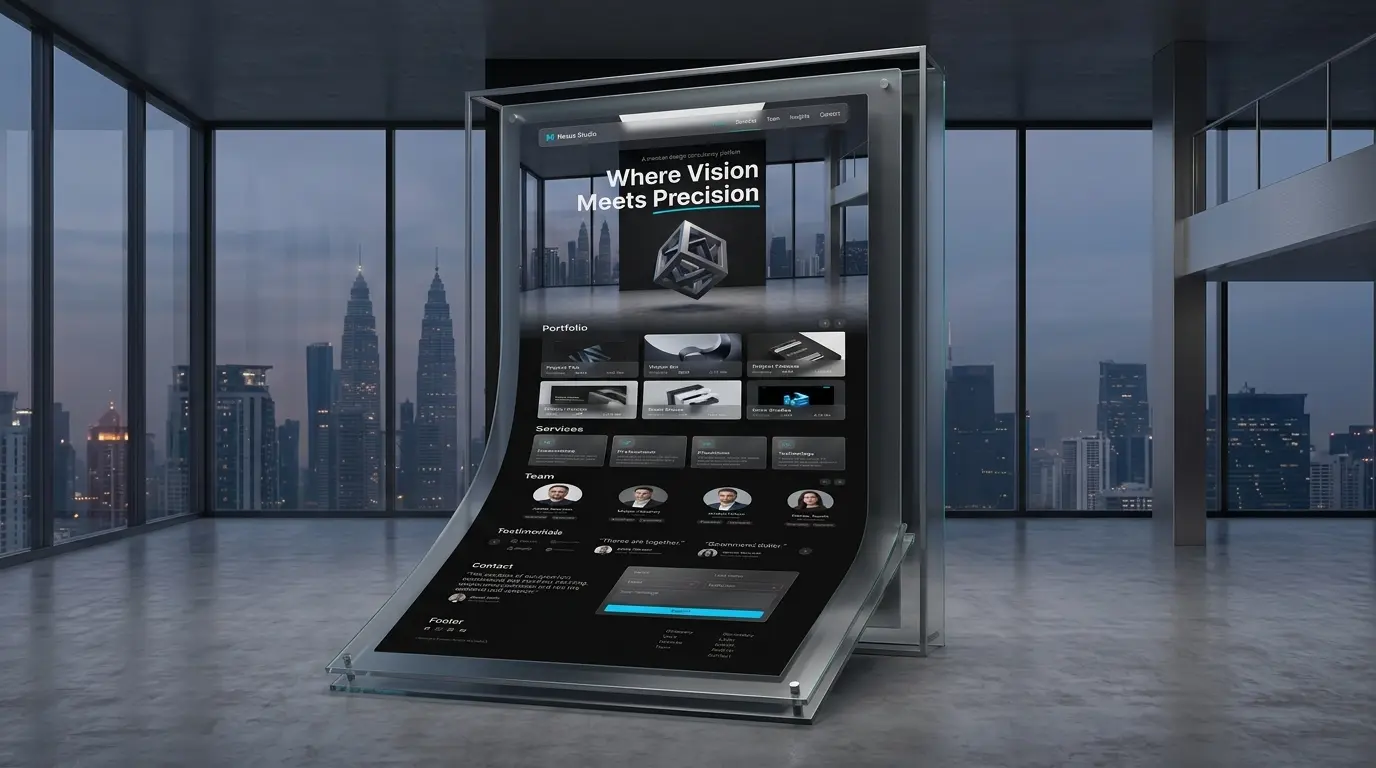
We designed the primary interface around a dark-material aesthetic that leverages tactile frosted glassmorphism, brushed metal accents, and precise volumetric lighting to establish immediate executive credibility. The layout follows a strict hierarchical grid, prioritizing a commanding hero section with a dynamic 3D geometric sculpture that anchors the visual narrative. Content containers utilize 12px blur filters to separate contextual layers without disrupting atmospheric depth. The portfolio employs an intelligent masonry grid with hover-reveal overlays that surface project metrics instantly, while interactive service cards expand to reveal technical methodologies on demand. Navigation remains transparent and frictionless, guiding users through a deliberate sequence of social proof, team expertise, and a multi-step contact form engineered for high-fidelity lead capture. Every micro-interaction is hardware-accelerated to maintain 60fps responsiveness, ensuring the visual language communicates technical mastery before the user reads a single line of copy.