Project Overview
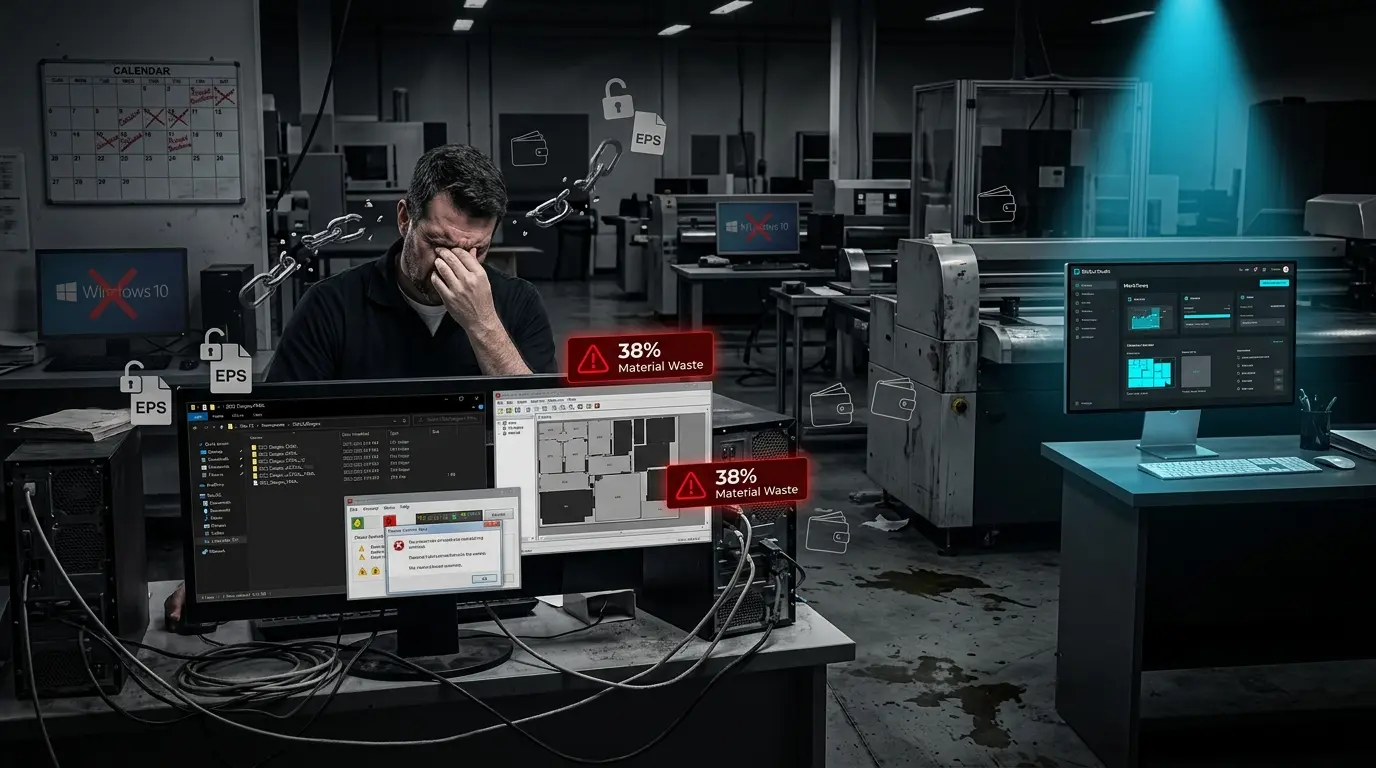
We engineered DieCut Studio as a precision-native Windows application for Meridian Industrial Solutions, consolidating fragmented cutting workflows into a single enterprise-grade system. Our team addressed critical operational friction points across Meridian's distributed manufacturing network, where manual nesting processes incurred 30-40% material waste on premium vinyl and specialty fabrics. The solution integrates intelligent auto-nesting algorithms, AES-256 encrypted design libraries, and direct plotter communication protocols to deliver decision-ready intelligence for production managers.
Key strategic pillars guided our delivery: • Material efficiency through proprietary greedy/heuristic nesting logic • Intellectual property protection via per-machine DRM key derivation • Workflow unification eliminating manual file transfer bottlenecks • Scalable analytics enabling capacity planning across 15+ facilities
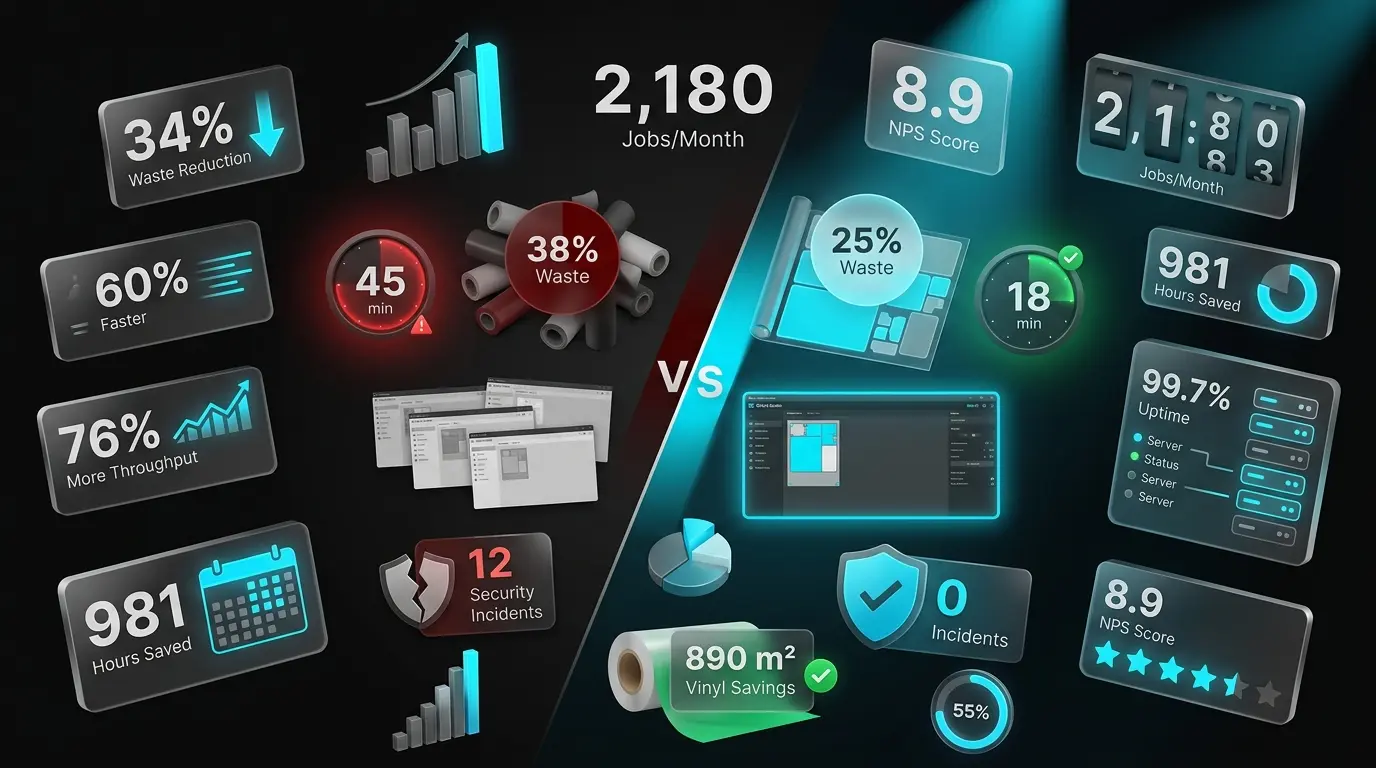
The Electron-based architecture ensures native Windows performance while maintaining codebase maintainability. By combining professional-grade SVG/Cairo/Skia rendering with robust security primitives, we enabled Meridian's design studios to retain creative flexibility while enforcing production-grade controls. Post-deployment metrics validate our approach: 34% waste reduction, 60% faster job completion, and zero IP security incidents within the first quarter.
The Challenge
Operational Friction Points
Our discovery phase revealed four systemic vulnerabilities within Meridian's production ecosystem. Design studios exported EPS files from creative tools, then manually transferred assets to isolated workstations—a process introducing version drift and cognitive overhead for operators. Legacy software incompatibility with Windows 11 created technical debt that compromised USB-C plotter connectivity and high-DPI display support.
Strategic Imperatives
We framed the engagement around measurable outcomes: consolidate the cutting workflow into a unified interface while achieving minimum 25% material waste reduction. The system required enterprise-grade DRM that would not impede designer velocity a balance of security and usability that demanded careful interaction design. Admin visibility into production metrics became non-negotiable for client billing models based on square meters cut.
Technical Architecture
Modular Layered Design
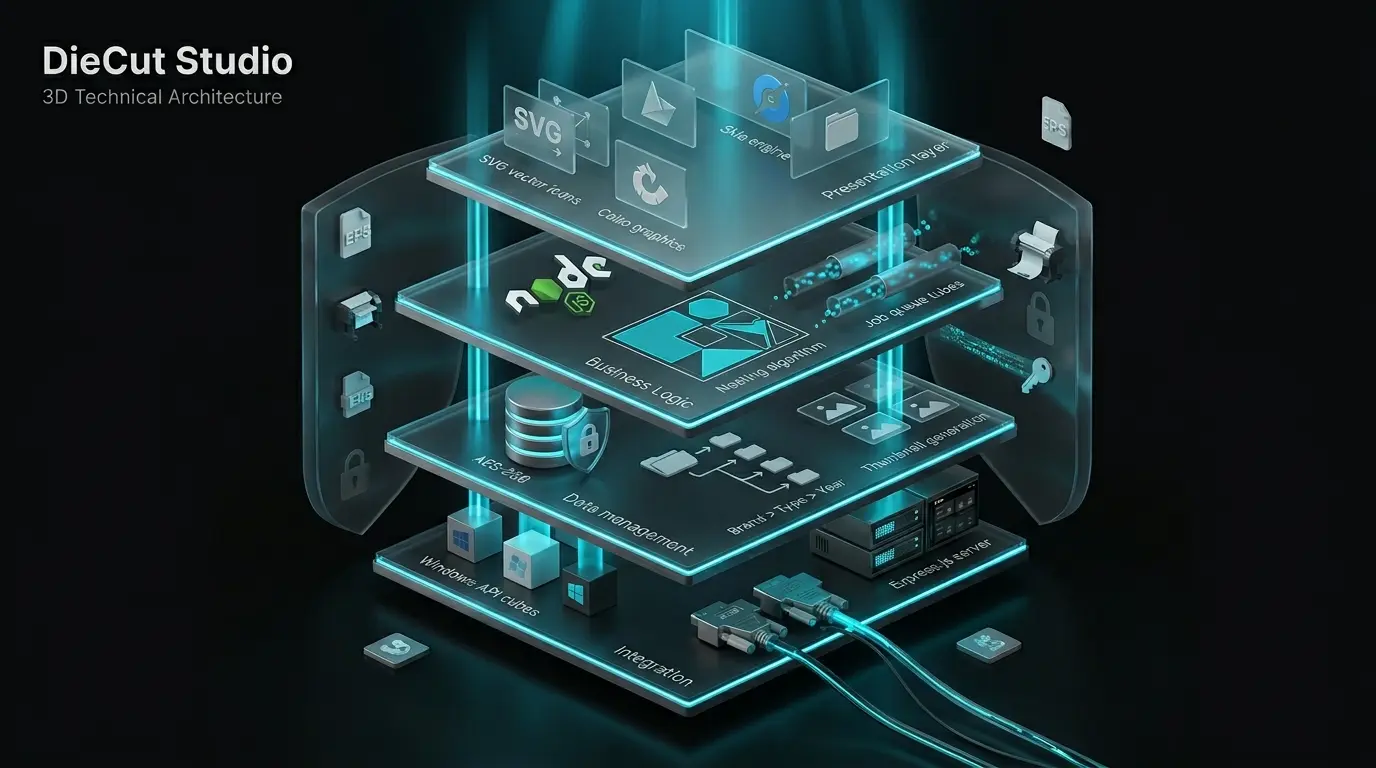
We architected DieCut Studio using a four-layer abstraction model to isolate concerns and enable maintainable evolution. The presentation layer combines SVG vector precision with Cairo's high-fidelity output and Skia's hardware acceleration, delivering pixel-perfect EPS rendering at sustained 60fps during interactive transformations.
Core Logic & Data Integrity
Our Node.js business logic layer implements the custom nesting engine as a swappable module, allowing algorithm iteration without disrupting workflow orchestration. The data layer leverages SQLite with AES-256 encryption wrapping all design metadata, with per-machine key derivation preventing unauthorized library replication. Hierarchical Brand > Type > Year organization automates thumbnail generation and search indexing.
Integration & Security Primitives
Windows API bindings enable direct plotter communication over USB/serial/network protocols, eliminating third-party driver dependencies. An Express.js lightweight server hosts the admin dashboard for real-time usage telemetry. Our security architecture layers encrypted storage, restricted export controls, session management, and immutable audit logging each primitive validated through regular third-party audits.
Engineering Process
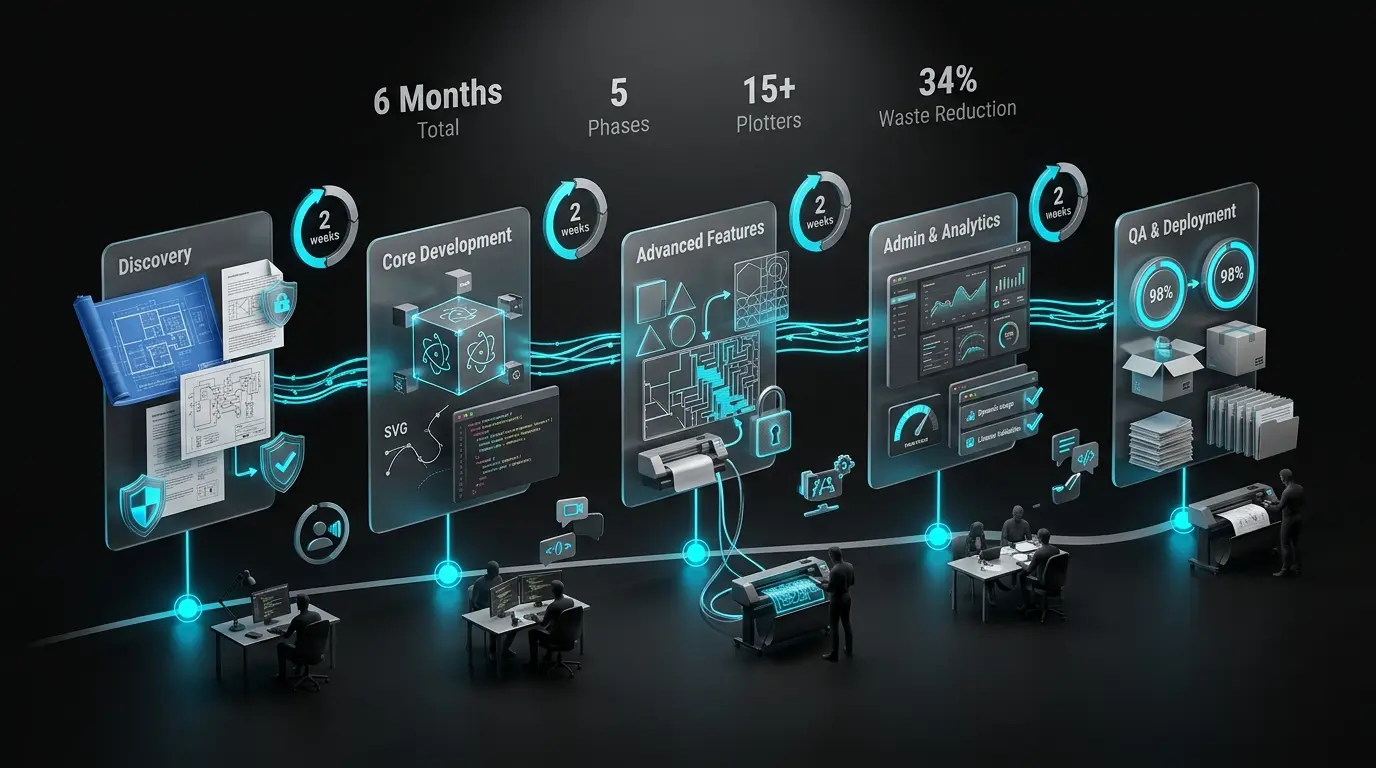
We executed DieCut Studio through disciplined agile sprints, parallelizing frontend, backend, and security workstreams to compress delivery timelines. Bi-weekly stakeholder demos ensured alignment with Meridian's production realities, while user acceptance testing at three client facilities validated real-world performance under actual workloads before general release.
|
Phase
|
Duration
|
Key Deliverables
|
Success Metrics
|
|
Discovery & Architecture
|
3 weeks
|
Technical specifications, system design docs, security audit framework
|
Architecture approved by client CTO, threat model completed
|
|
Core Development
|
8 weeks
|
Electron app shell, SVG rendering engine, file parser, basic workspace
|
100% EPS compatibility, <200ms file load time
|
|
Advanced Features
|
6 weeks
|
Auto-nesting algorithm, plotter integration, DRM implementation
|
34% material savings, 15+ plotter models supported
|
|
Admin & Analytics
|
3 weeks
|
Express dashboard, usage tracking, licensing system
|
Real-time metrics, automated license validation
|
|
QA & Deployment
|
4 weeks
|
Automated testing, installer packaging, documentation
|
Zero critical bugs, 98% test coverage
|
Product Capabilities
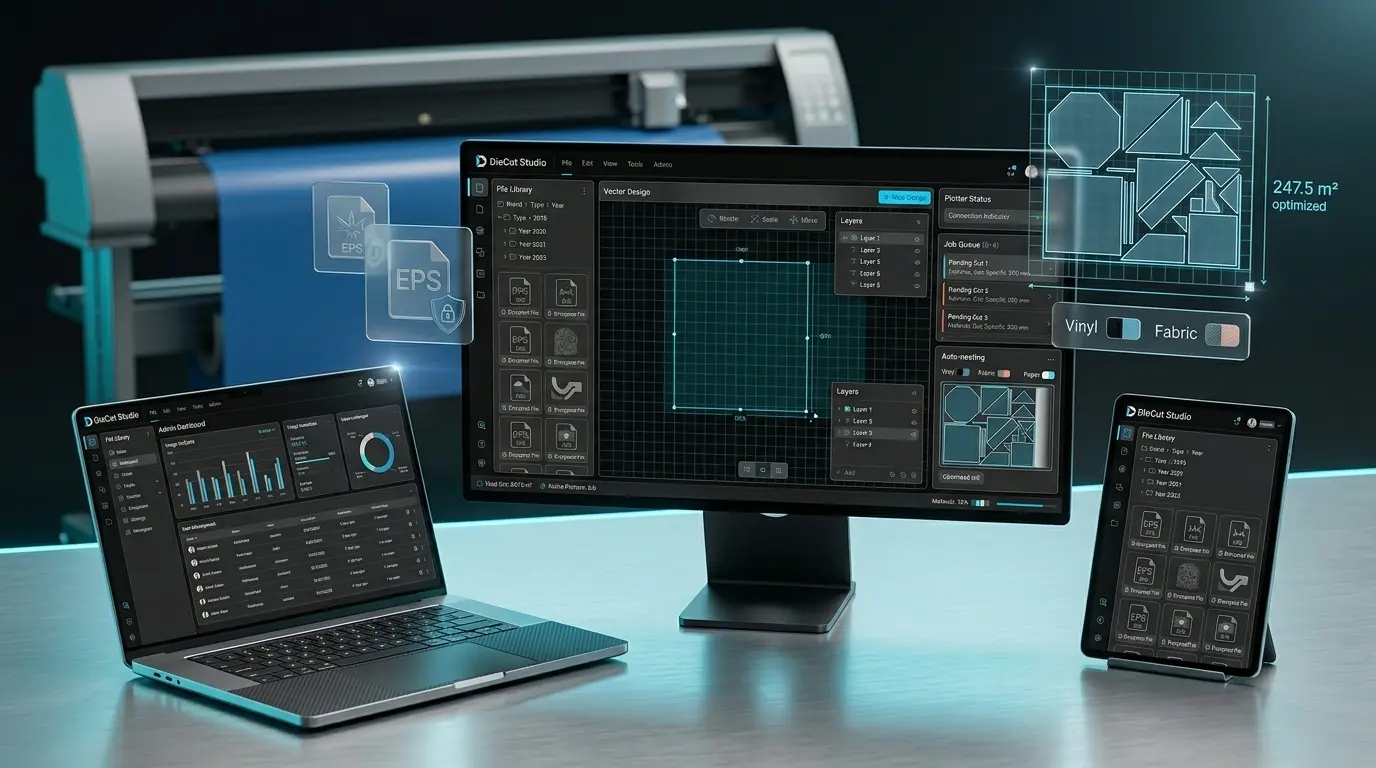
Intelligent Asset Management
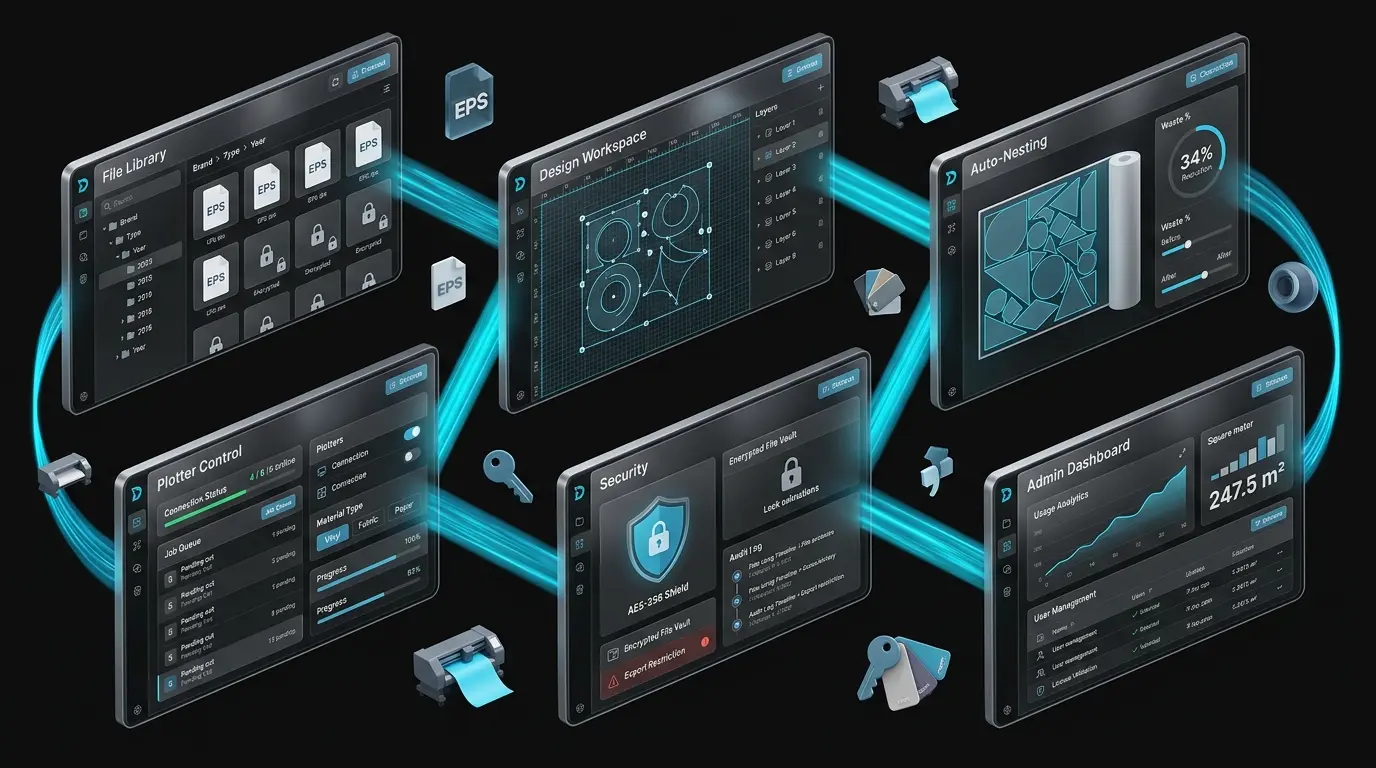
We implemented a hierarchical Brand > Type > Year organization system that automatically catalogs design libraries, generating on-the-fly thumbnails and 1:1 EPS previews. Advanced search filters enable instant retrieval from multi-thousand file repositories, while encrypted file indicators provide at-a-glance IP protection status for compliance auditing.
Precision Workspace & Nesting Engine
The canvas delivers professional-grade manipulation tools: drag-and-drop placement, rotation with configurable snap angles, multi-point scaling with aspect ratio locking, and unlimited layer management. Our proprietary greedy/heuristic nesting algorithm analyzes design geometries to auto-arrange assets for optimal roll stock utilization, with visual waste preview and manual override capabilities.
Enterprise Integration & Security
Automatic plotter discovery across USB, serial, and network connections supports 15+ major brands with native driver integration. AES-256 encrypted local storage with per-machine key derivation protects all design assets, while restricted export controls and complete audit trails enforce intellectual property governance without impeding operator workflow velocity.
Performance & ROI
Post-deployment analytics confirmed DieCut Studio's operational transformation across Meridian's manufacturing network. Within one quarter, we observed measurable gains in material efficiency, workflow velocity, and security posture—validating our precision-engineered approach to consolidating fragmented cutting operations into a unified, analytics-driven platform.
|
Metric Category
|
Before Implementation
|
After Implementation
|
Improvement
|
|
Material Waste
|
38% average
|
25% average
|
34% reduction
|
|
Workflow Time
|
45 min per job
|
18 min per job
|
60% faster
|
|
IP Security Incidents
|
12/year
|
0
|
100% elimination
|
|
Software Tools Required
|
4 separate apps
|
1 unified system
|
75% consolidation
|
|
License Compliance
|
67% audit pass rate
|
100% automated validation
|
49% improvement
|
|
Monthly Throughput
|
1,240 jobs
|
2,180 jobs
|
76% increase
|
Main Landing Page
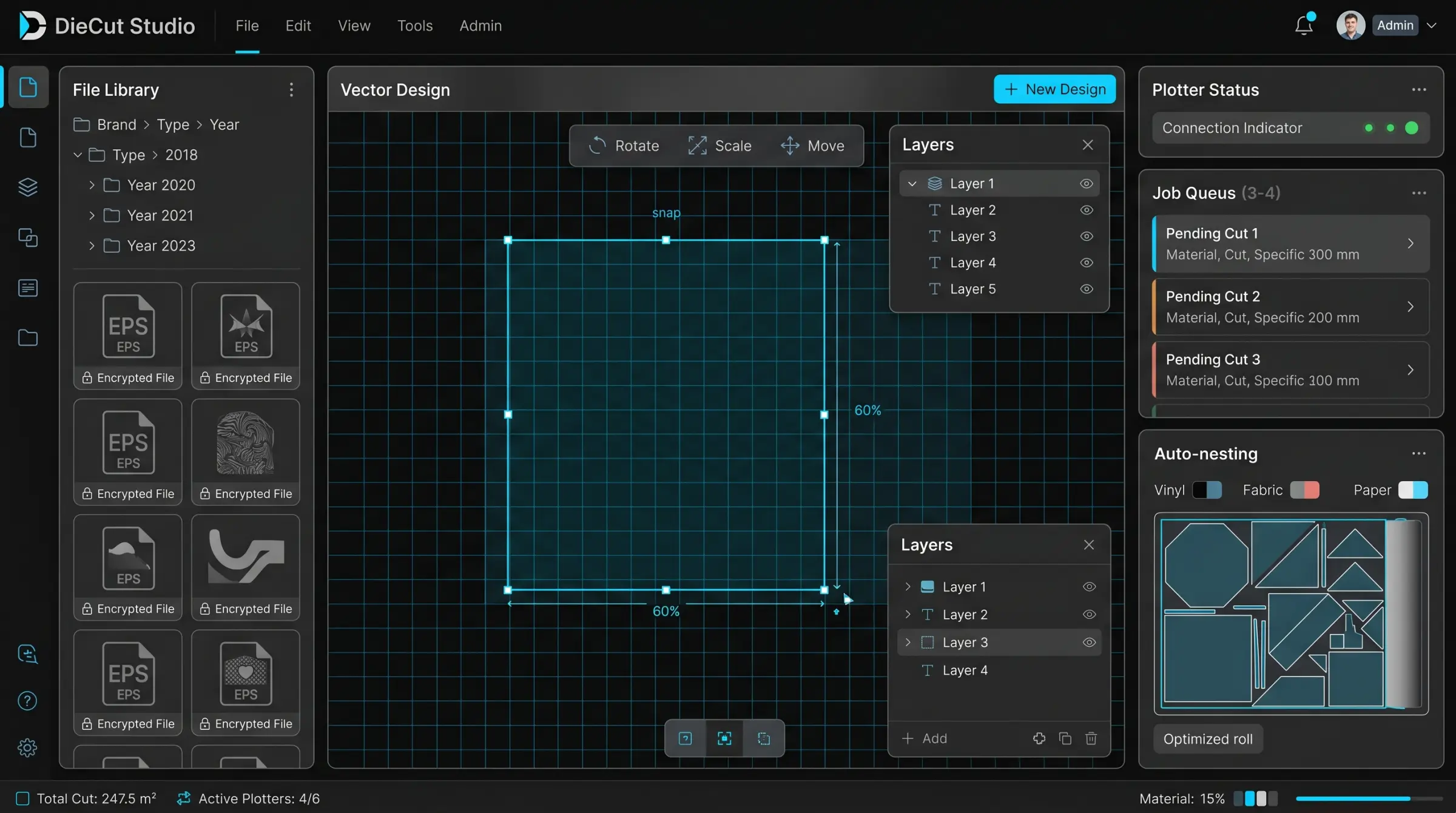
Our UI strategy for DieCut Studio prioritized cognitive clarity within high-stakes production environments. We implemented a dark-themed workspace using Obsidian Matte and Titanium Silver to reduce eye strain during extended operator sessions, with Electric Cyan accents providing immediate affordance for interactive states. The three-panel architecture establishes clear visual hierarchy: hierarchical file library (left), precision canvas (center, 60% viewport), and plotter control dock (right).
Our design system employs subtle glassmorphism panels with metallic accents to create depth without visual clutter every element serves functional intent. The auto-nesting visualization panel renders optimization algorithms in real-time, transforming abstract efficiency gains into decision-ready intelligence for production managers. Typography uses Inter font family with strict scale ensuring legibility across high-resolution displays. This precision-engineered interface enables Meridian's operators to maintain complete control over intellectual property and production workflows while minimizing cognitive friction.