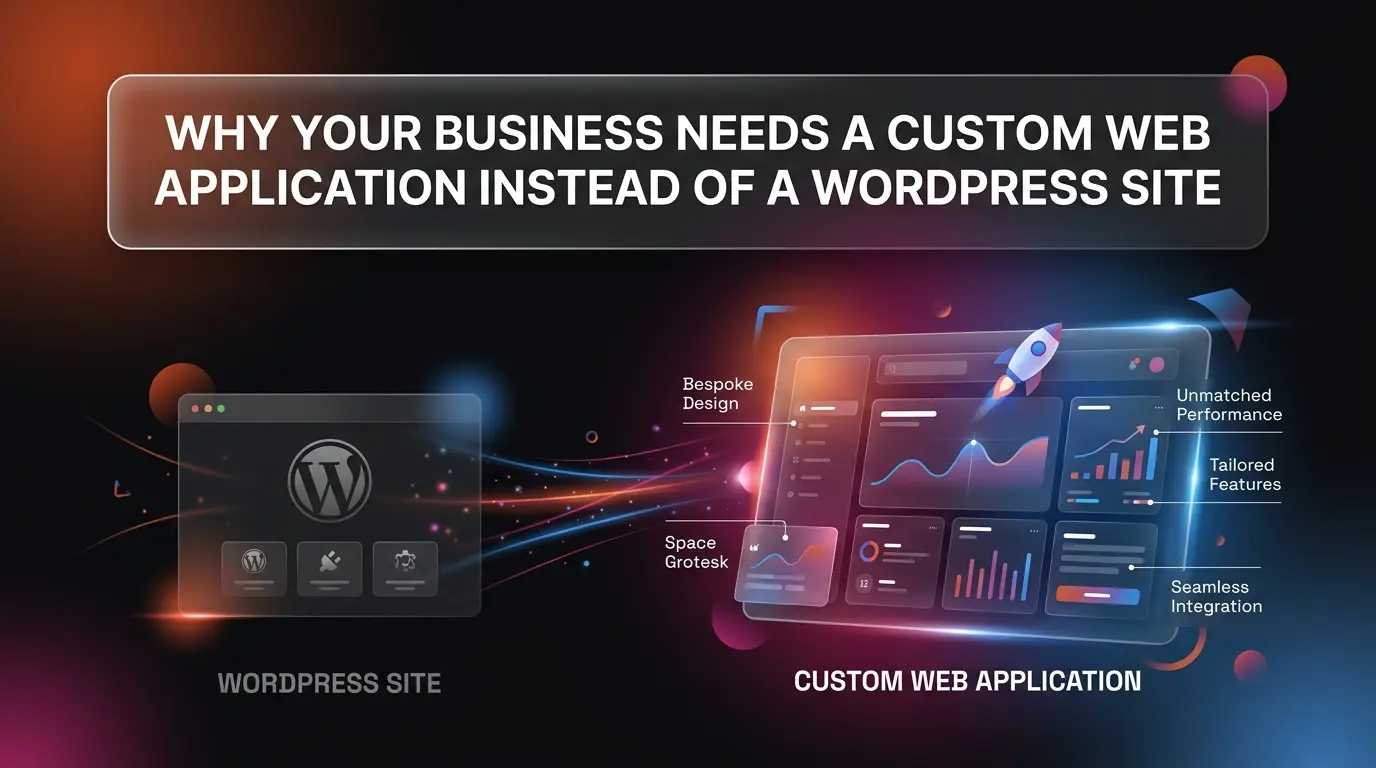
Introduction: The WordPress Ceiling
WordPress powers over 40 percent of the web, and for good reason. It is free, flexible, and has a massive ecosystem of themes and plugins. For simple blogs, brochure websites, and basic e-commerce stores, WordPress is often the right choice. But there is a ceiling, and most growing businesses hit it faster than they expect.
The ceiling appears when your business needs custom workflows, complex user roles, integrations with third-party systems, real-time data processing, or performance that plugin-heavy WordPress sites simply cannot deliver. At that point, every hour spent patching WordPress with more plugins is an hour wasted. You are building a house of cards when you should be building an engineered structure.
At The DIGIT HQ, we have migrated dozens of businesses from WordPress to custom-built web applications. This article explains when and why that transition makes sense, backed by real engineering analysis rather than marketing hype.
The Real Cost of WordPress at Scale
WordPress is "free" in the same way that a free puppy is free. The initial cost is zero, but the ongoing costs of maintenance, security patches, plugin conflicts, performance optimization, and hosting quickly compound. Let us break down the hidden costs that most businesses do not account for.
Plugin Dependency and Maintenance
A typical WordPress business site runs 20 to 40 plugins. Each plugin is maintained by a different developer or company, updated on a different schedule, and tested against a different set of other plugins. When WordPress releases a core update, any of these plugins can break. When a plugin releases an update, it can conflict with other plugins. This creates a maintenance burden that grows linearly with every plugin you add.
We have seen businesses spending 10 to 20 hours per month simply managing WordPress plugin updates, resolving conflicts, and fixing broken functionality. At professional engineering rates, that is thousands of pounds per month spent on maintenance that adds zero business value.
Performance Limitations
WordPress loads its entire PHP framework, queries its database, and processes all active plugins on every single page request. Even with caching plugins, the underlying architecture is not designed for high-performance applications. A custom application built with Laravel or CodeIgniter can serve the same content 5 to 10 times faster because it loads only the code that is needed for each specific request.
Page speed directly impacts conversion rates. Research consistently shows that every additional second of load time reduces conversions by 7 to 10 percent. For an e-commerce business doing one million pounds in annual revenue, a one-second improvement in page speed could mean an additional 70,000 to 100,000 pounds in revenue. Our Performance and Core Web Vitals Optimization team routinely achieves these improvements for clients migrating from WordPress.
Security Vulnerabilities
WordPress is the most targeted CMS in the world. Its popularity makes it the primary target for automated attacks, and its plugin ecosystem is the primary attack vector. A single vulnerable plugin can expose your entire site, your customer data, and your business reputation.
Custom applications are inherently more secure because they have a smaller attack surface. There are no publicly known vulnerabilities in your custom codebase. There are no plugins to exploit. And security measures can be tailored precisely to your application's specific requirements.
When Custom Development Makes Sense
Custom development is not always the answer. It requires higher upfront investment and a longer initial development timeline. But for businesses that meet any of the following criteria, the return on investment is compelling:
- Complex Business Logic: If your application requires custom workflows, approval processes, multi-step forms, or business rules that go beyond what WordPress plugins can handle.
- Integration Requirements: If your application needs to integrate with CRMs, ERPs, payment gateways, shipping APIs, or other third-party systems in ways that require custom API development.
- Scalability Needs: If you expect your user base to grow significantly and need an application that can handle thousands of concurrent users without performance degradation.
- Data Sensitivity: If your application handles sensitive customer data, financial information, or healthcare records that require compliance with specific regulatory frameworks.
- Competitive Differentiation: If your web application is your product (SaaS) or a critical component of your customer experience, custom development gives you complete control over every aspect of the user experience.
The Custom Development Process
Building a custom web application is not as daunting as it sounds when you work with an experienced engineering partner. Our process at The DIGIT HQ follows a proven methodology:
We begin with a thorough Product Discovery phase where we map your business requirements, user flows, and technical constraints. This produces a detailed specification that serves as the blueprint for development.
The UI/UX Research and Interaction Design phase ensures that your application is not just functional but delightful to use. We design every interaction, every transition, and every error state before writing a single line of code.
Development follows an agile sprint methodology with continuous staging deployments, regular client reviews, and comprehensive quality assurance testing at every milestone.
Real-World Migrations: From WordPress to Custom
Our portfolio demonstrates the transformative impact of moving from template-based solutions to engineered platforms. The Apex AutoCare Hub replaced a sluggish WordPress site with a custom booking and management platform that reduced page load times by 80 percent and increased online bookings by 150 percent.
The NurtureCare OB/GYN Platform required HIPAA-compliant patient management features that no WordPress plugin could safely provide. Our custom-built solution handles sensitive health data with enterprise-grade security while providing a seamless patient experience.
Making the Decision
The question is not "WordPress or custom?" The question is "What does my business need to succeed, and what is the most cost-effective way to get there?" For simple content websites, WordPress remains excellent. For anything that involves complex business logic, sensitive data, or ambitious growth plans, custom development is not an expense. It is an investment that pays dividends for years.
If you are unsure which path is right for your business, contact The DIGIT HQ for a free technical consultation. We will give you an honest assessment, even if our recommendation is to stick with WordPress.